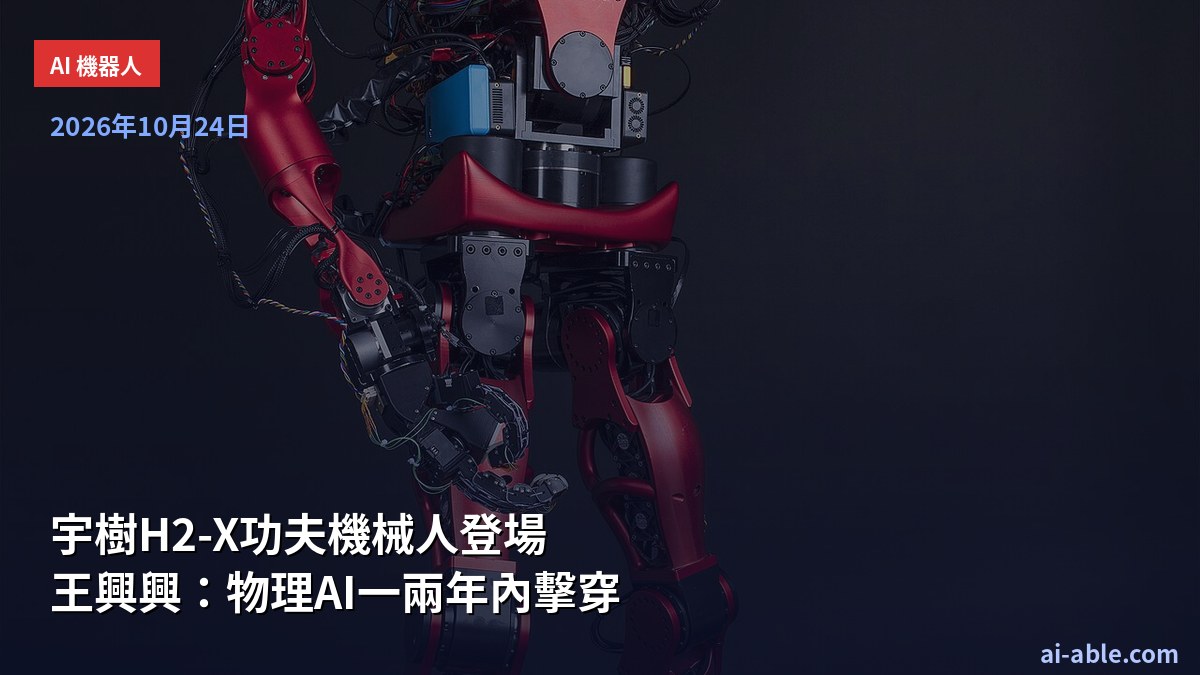
As the global humanoid robot race heats up, China’s Unitree has once again seized the tech headlines with a stunning demo video. On October 21, the world’s largest humanoid robot maker unveiled the “H2-X Kung Fu Legend Guardian” — a humanoid that throws fluid martial-arts combinations, disarms a knife-wielding attacker, and lifts a car to free a trapped person. And at the 2026 World Physical AI Congress the same week, founder Wang Xingxing dropped a bombshell prediction: physical AI has already shown signs of an imminent breakthrough, arriving in as little as one to two years.
H2-X: The Kung Fu “Guardian” Robot
According to Unitree’s official promotional video, the H2-X stands nearly six feet tall, weighs 154 pounds, and offers a claimed battery life of up to eight hours. The most striking sequence shows the robot intervening in a staged violent attack: as a knife-wielding “assailant” advances, the robot steps between them and the victim, squares up, and subdues the attacker. Subsequent scenes show it jumping from a four-meter platform, punching a car body, and lifting one end of a sedan to assist in rescue scenarios.
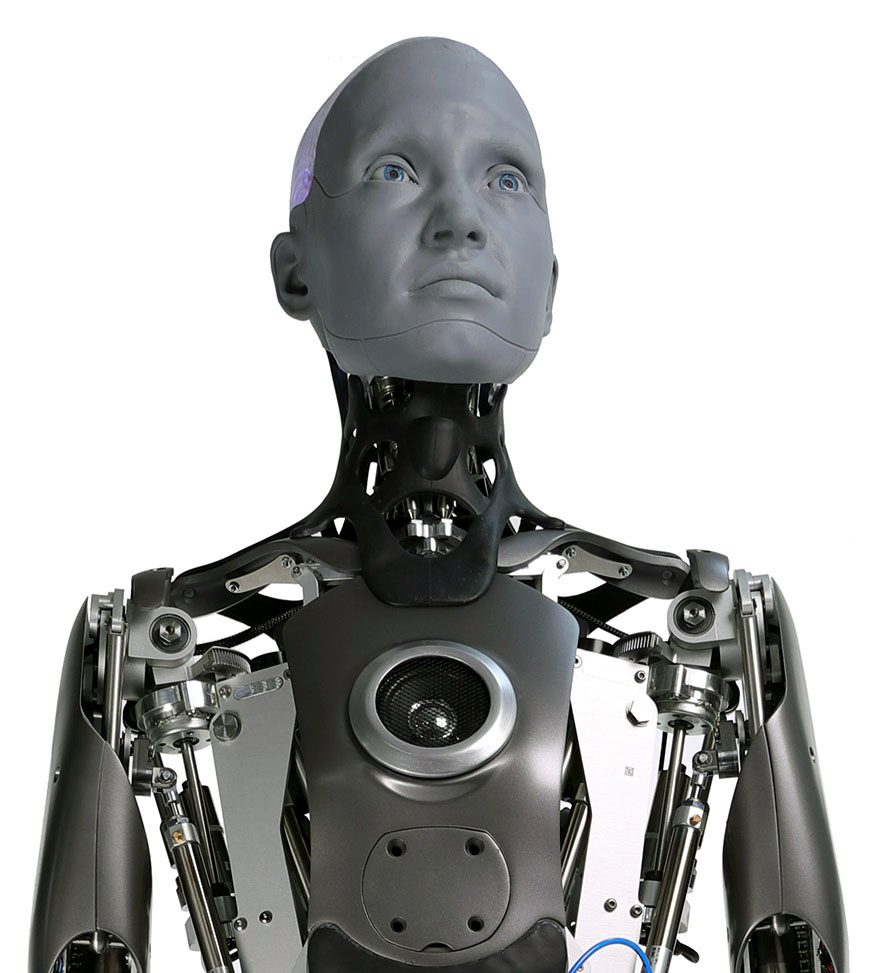
International media reacted with enthusiasm. SCMP billed it as a “guardian robot that can disarm attackers and lift cars,” while Forbes focused on the leap in dynamic control — jumps, flips and heavy lifts executed in one fluid motion, evidence that Unitree’s whole-body motion control algorithms now rank among the world’s best. The demo is admittedly staged, and Unitree has not announced a release date or price for the H2-X. But the capability envelope on display — martial arts, security, and rescue scenarios — is already forcing rivals to recalibrate what humanoid robots can plausibly do.
Wang Xingxing: Physical AI Breakthrough Within Two Years
Even more newsworthy than the robot itself was Wang Xingxing’s keynote at the World Physical AI Congress in Hangzhou on October 22. The 36-year-old founder declared that physical AI “has already shown signs of being broken through — very likely within one to two years, or two to three at most.” He predicted embodied intelligence could see its ChatGPT moment as soon as next year, and candidly admitted: “The biggest mistake I ever made was not believing in AI early enough.” Only “a few thousand people” worldwide truly grasp the potential of frontier AI models, he argued — nearly everyone, himself included, still underestimates it.
Wang also warned that industry competition will be “brutal”: the market is enormous, but too many embodied-intelligence startups are crowding in. He described himself as “genuinely afraid of wasting a single day,” and revealed that Unitree is building a “self-evolving” AI system in which robots write their own code, run simulations, and feed improvements back into real-world performance — a closed loop of autonomous self-improvement. He added that the Unitree G1 has now rolled off the line in cumulative volumes of roughly 10,000 to 20,000 units, and announced the “YuChuang Program,” a five-year plan to incubate more than 200 ecosystem companies.
A Stunning Market Reversal
A month ago, Unitree was mired in controversy: its stock peaked on debut at 1,100 yuan, then slid all the way to 404 — a drawdown of more than 60% that wiped out 280 billion yuan in market value. This week the story flipped completely. Catalyzed by the H2-X launch and the Physical AI Congress, Unitree shares surged more than 40% within the week, including a 20% limit-up day that pushed the stock above 600 yuan and restored its market cap to over 250 billion yuan. Comments from Elon Musk on robot production capacity added fuel, sending the CSI Robot Index up nearly 7% in a single session.
Fundamental signals point the same way. China’s Ministry of Commerce reported that embodied-intelligence robot sales on key platforms grew 22.6% in the first three quarters of 2026, and observers now describe robots, AI and innovative pharmaceuticals as the “new three” of exports. As China’s first listed embodied-intelligence champion, Unitree is graduating from research toy to scaled product — its five-figure cumulative G1 output already makes it one of the world’s largest humanoid manufacturers.
A Word of Caution: Staged Demos vs. Mass Production
The industry, however, is keeping a measure of skepticism. The security and rescue scenes in the promo are choreographed performances in controlled environments — a vast gulf remains between them and the unstructured chaos of the real world. English-language coverage noted that such demos “highlight advances in dynamic control while underscoring the need for safety validation.” Wang’s “one to two years” is also an optimistic forecast; even he offers a conservative window of two to three years, and estimates that frontier AI models reaching everyday life will take at least another five to ten.
Conclusion
The H2-X’s kung fu showcase may be theater, but its symbolism is real: humanoid motion capabilities are approaching the threshold of practical usefulness, and China’s supply chain is compressing costs and scaling output at remarkable speed. For investors, Unitree’s 40% weekly rebound is a reminder of how fast sentiment can reverse. For industry watchers, Wang’s fear of “wasting a single day” is the truest annotation of this physical AI arms race. Whether embodied intelligence really delivers its ChatGPT moment within two years, as he predicts, is a story every AI observer should follow closely.