Performance Leap: Fewer Hallucinations, Blazing Speed
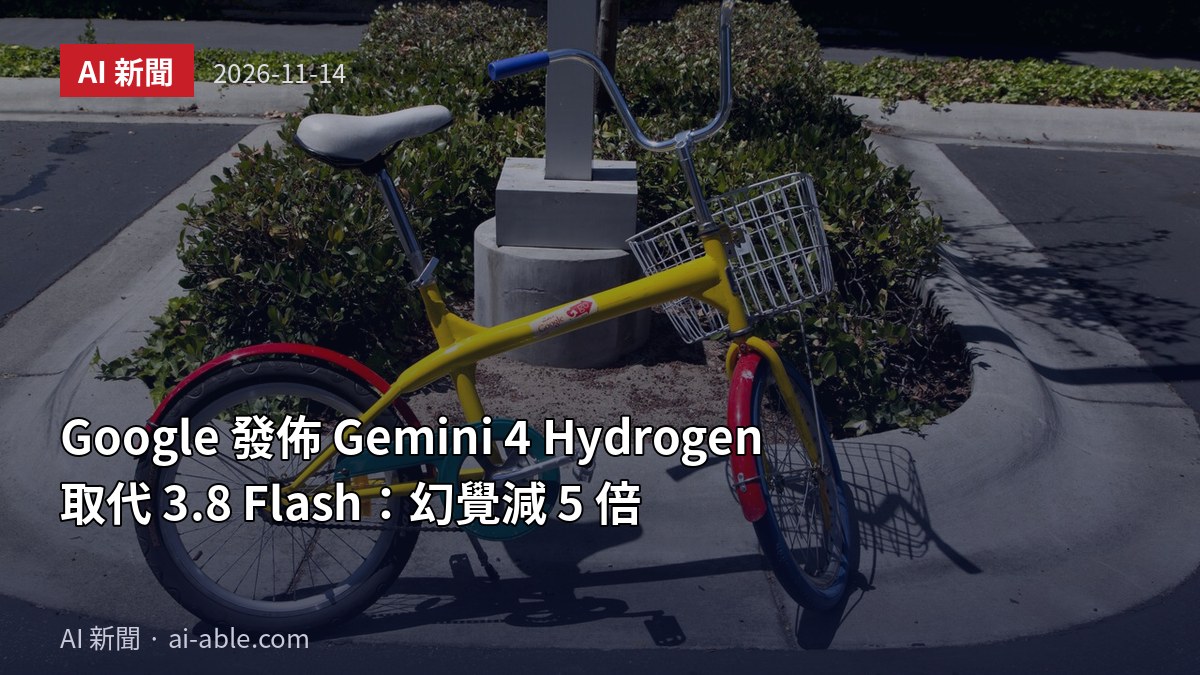
According to Google’s official documentation, Gemini 4 Hydrogen (model ID: gemini-4-hydrogen) is positioned as the speed-and-efficiency tier for “everyday coding and agentic workflows.” Compared with its predecessor Gemini 3.8 Flash, it writes cleaner code and cuts fabricated claims by more than 5x by flagging missing context instead of guessing; it also batches read and search tool calls in parallel and adapts more gracefully when tool calls fail.
On pricing, Hydrogen costs $1.50 per 1M input tokens and $7.50 per 1M output tokens. It is available on both the free and paid tiers of Google AI Studio and the Gemini API, shares the unified 1M-token context window with Gemini 4 Carbon and Argon, and supports long decode up to 1M tokens.
The new model also introduces a fourth thinking level, xhigh, alongside low, medium, and the default high, giving developers finer control over latency, cost, and reasoning depth. On the technical side, synchronous output caps at 65,536 tokens, extendable to 1M via background execution or client-side continuation; implicit caching kicks in automatically on prompts of at least 4,096 tokens and discounts cached input tokens by 95% on cache hits.
Naming Backlash: The Periodic Table as a Marketing Disaster

The product’s progress, however, has been overshadowed by its naming. In a 558-point Hacker News thread, the most-upvoted comments mocked the “periodic table” scheme: with model tiers named Hydrogen, Argon, and Carbon, the ordering is neither alphabetical, nor by atomic mass, nor by abundance — developers have no intuitive way to tell which model is stronger or costlier. One commenter quipped: “Are we sure the guy who creates Google naming schemes is not held hostage, and those are his desperate attempts to communicate with the outside world?”
Others raised a more practical concern: Hydrogen is stronger and faster than 3.8 Flash (Google cites roughly 2.5x the speed), but it is priced the same as the non-discounted 3.8 Flash — considerably higher than what users actually pay today for 3.8 Flash or 3.5 Flash-Lite. Is Google quietly abandoning its “fast and cheap” entry tier? The company keeps only 3.5 Flash-Lite as the lowest-cost option for high-volume classification and routing workloads.
Enter Orchestrator: Two Models Tag-Team Automatically
Launched alongside Hydrogen is a new option in Google Antigravity called Orchestrator. Its approach is dynamic, bidirectional routing: Carbon starts in a read-only phase to explore dependencies, resolve ambiguities, and build a concrete plan with explicit re-planning triggers; Hydrogen then takes over to write edits, update packages, and run tests. If Hydrogen hits friction, it hands back to Carbon to inspect state, repair the plan, and resume. Google reports that on Terminal-Bench 4.1, Orchestrator reached near-Carbon task success rates while consuming 24% less quota and completing 19% faster on average.
The official blog stresses that this differs from the industry-standard “static model router,” which guesses task difficulty from the first prompt and breaks down as long-running agents encounter phases of varying complexity. In just a couple of days, Google says, tens of thousands of agent “swarms” have been launched on Antigravity. As for availability, Hydrogen is rolling out to paid Google AI Pro and Ultra subscribers; Orchestrator (Carbon) and Orchestrator (Argon) are for Ultra subscribers, while paid Pro subscribers get Orchestrator (Argon).
The Antigravity agent in Managed Agents now defaults to Gemini 4 Hydrogen under the hood. Developers can also wire multi-model pipelines manually via the Antigravity SDK — for example, running multiple Hydrogen agents for issue triage and routine coding while a Carbon agent handles large refactors and security reviews.
Migration Notes: Breaking API Changes Developers Must Handle

Migrating from 3.8 Flash to Hydrogen is not just a model-ID swap. The official migration checklist lists several breaking changes: the context window moves from separate 1M-input/64K-output budgets to one unified 1M-token window, so hardcoded low output caps must be removed; the default thinking level changes from medium to high, and minimal is rejected outright; explicit context caching is gone (cachedContents and caches.create are unsupported), replaced by default-on implicit caching; sampling parameters like temperature, top_p, and top_k are ignored — and out-of-range values now return a 400 error; finally, billing counts every token the model processes, including thinking tokens and internal grounding system instructions.
Experienced developers on Hacker News added a caveat: beyond benchmark scores, what agentic workflows actually care about is p90/p99 stability — overreach (doing more than asked), refusing to fail fast, or even doing the opposite of what was asked. These tail-end failures are what kill production reliability. Hydrogen’s real-world track record on that front remains to be proven by the community.
Conclusion
Gemini 4 Hydrogen’s technical upgrade is real: 5x fewer fabricated claims, Terminal-Bench jumping from 18.2% to 57%, four thinking levels, and a unified 1M context window make it a clear upgrade for everyday coding. But the cognitive chaos of the periodic-table naming, the de facto disappearance of the entry-level price tier, and the breaking changes around caching and sampling parameters make this transition more controversial than it needed to be. For developers, the sensible play is to work through the official migration checklist item by item, run evaluations across all four thinking levels in a non-production environment, and only then decide when to switch. As for the naming — perhaps when “Uranium-235” ships, we’ll know Google is serious about collecting the entire periodic table.