Key Takeaways
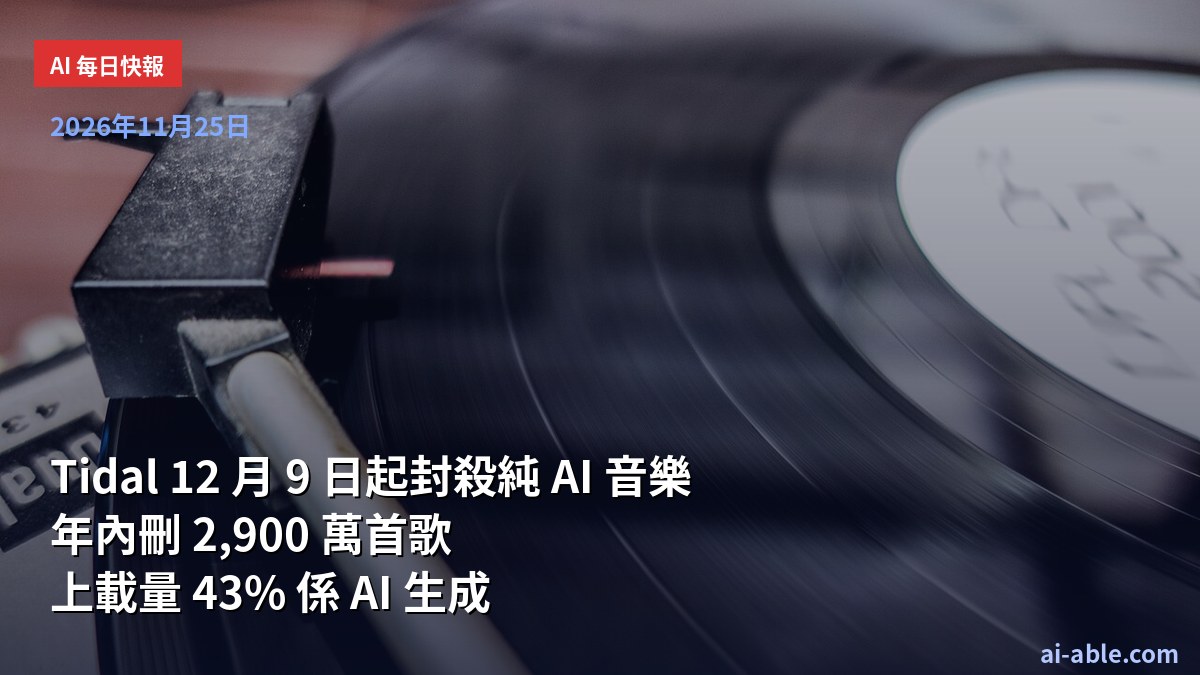
Music streaming service Tidal announced on Tuesday (November 24) that it will ban fully AI-generated music starting December 9. Tracks identified as made entirely with AI will be rejected and removed, with more than 29 million songs expected to be deleted by the end of the year and roughly 80,000–85,000 tracks rejected per day afterwards. Tidal music lead Robert Andersen said AI-generated tracks made up 43% of songs distributed to the platform in the past 90 days, and that the company’s June policy of labelling and demonetising such tracks had not been enough of a deterrent, forcing a more “drastic” response.
This is the first time a major streaming platform has moved from labels to an outright ban on AI music, and it marks the moment the “AI slop” problem spilled over from social media into the music industry.
43% of Uploads Are AI-Generated: Why Tidal Went All-In
According to TechCrunch and The Verge, around 27 million tracks on Tidal (6.3% of the catalogue) are fully AI-generated, yet 96% of them have zero streams. The company argues that the issue is not that new songs need time to find an audience, but that at this scale the authentic music subscribers are looking for gets buried.

The timeline matters: Tidal began labelling and demonetising 100% AI-generated tracks in June, yet three months later AI tracks still accounted for more than 40% of uploads, showing that labels and demonetisation alone had little deterrent effect. “We believe this will resonate with both artists and listeners alike, as 96% of all AI-generated songs receive zero plays at all,” Andersen wrote on X.
What the New Rules Say: Detection Tools, Distributors and the “AI-Assisted” Line
Tidal’s new policy has three pillars:
- Full rejection of purely AI works: any track whose metadata indicates it was made entirely with AI will be rejected outright.
- Holding distributors accountable: music distribution services are banned from delivering fully AI-generated tracks, with Tidal using the French IRCAM detection tool Ircam Amplify alongside metadata checks.
- AI-assisted creation is still allowed: songs made with the help of AI tools remain welcome, as long as AI is not the “sole output”.
In a separate post, Tidal added that wholly AI-generated music designed to mislead listeners and impersonate artists is “another serious problem that has only increased in scale”, diverting streams and royalties away from artists and confusing fans.
How Other Platforms Compare: From Labels to Filters
Bandcamp banned AI music earlier this year. Other large streaming platforms have taken a milder approach: Spotify recently said it removed 50 million AI slop and spam tracks from its recommendations over the past year and launched new “AI persona” badges for artists using an AI identity; YouTube has rolled out AI music labels, Apple Music plans to launch them this year, and Deezer lets users filter AI music out entirely.

In other words, Tidal is the first major streamer to go from “labelling” to “outright ban”. The move is creator-friendly but carries commercial risk: as a smaller platform built on hi-fi quality and artist support, siding with human creators is partly a branding decision.
Three Implications for the Industry
1. AI music tool makers need to reposition
When platforms draw the line at “AI as the sole output”, AI music tools shift from one-click mass uploads toward genuine assistance: co-writing, arrangement, mastering or demo generation rather than finished products. Content-farm style operations built on automated generation and distribution will be hit hardest.
2. Detection and standards disputes will intensify
Deciding whether a song is “fully AI-generated” remains hard: detection tools produce false positives, and metadata relies on self-reporting. Misclassifying a human track as AI, or letting AI tracks pass as human-made, could both spark disputes and legal challenges.
3. “Content quality” becomes the new streaming battleground
As generative AI pushes the cost of content toward zero, a platform’s core value is no longer how many songs it has but how many are worth hearing. Whether Spotify, Apple Music and YouTube follow with stricter measures will shape the direction of the whole industry.
Conclusion: In the Age of AI Slop, Authenticity Is the Scarce Resource
Tidal’s decision underlines a broader trend: as generative AI inflates the supply of content endlessly, “made by humans” itself becomes a value that needs protecting and certifying. In the short term, creators and listeners benefit from a cleaner catalogue; over the longer term, much depends on whether detection technology and industry standards can keep up. Musicians using AI tools should keep records of their creative process and declare clearly how AI was used, while platforms and distributors will need transparent review and appeals processes as the next step.
Sources: TechCrunch, The Verge, Variety, Ars Technica (November 24, 2026).