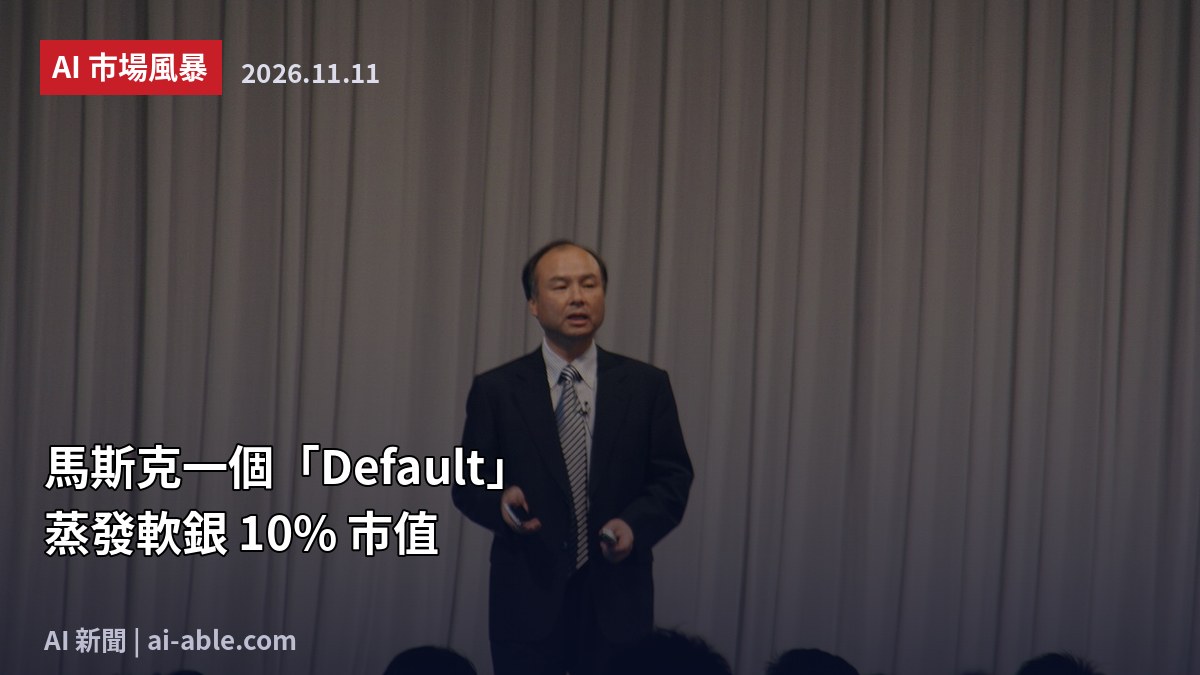
One word, $3.9 billion gone. When Elon Musk replied to a post on X on November 6 with a single term — “Default” — SoftBank Group shares plunged 10.83% in Tokyo, their worst single-day drop in years, and founder Masayoshi Son’s personal fortune shrank by roughly $3.9 billion in a session. The quake, triggered by an evidence-free allegation, has laid bare the full leverage behind the most aggressive bet of the AI era — and put the Japanese investing legend’s entire balance sheet on trial.
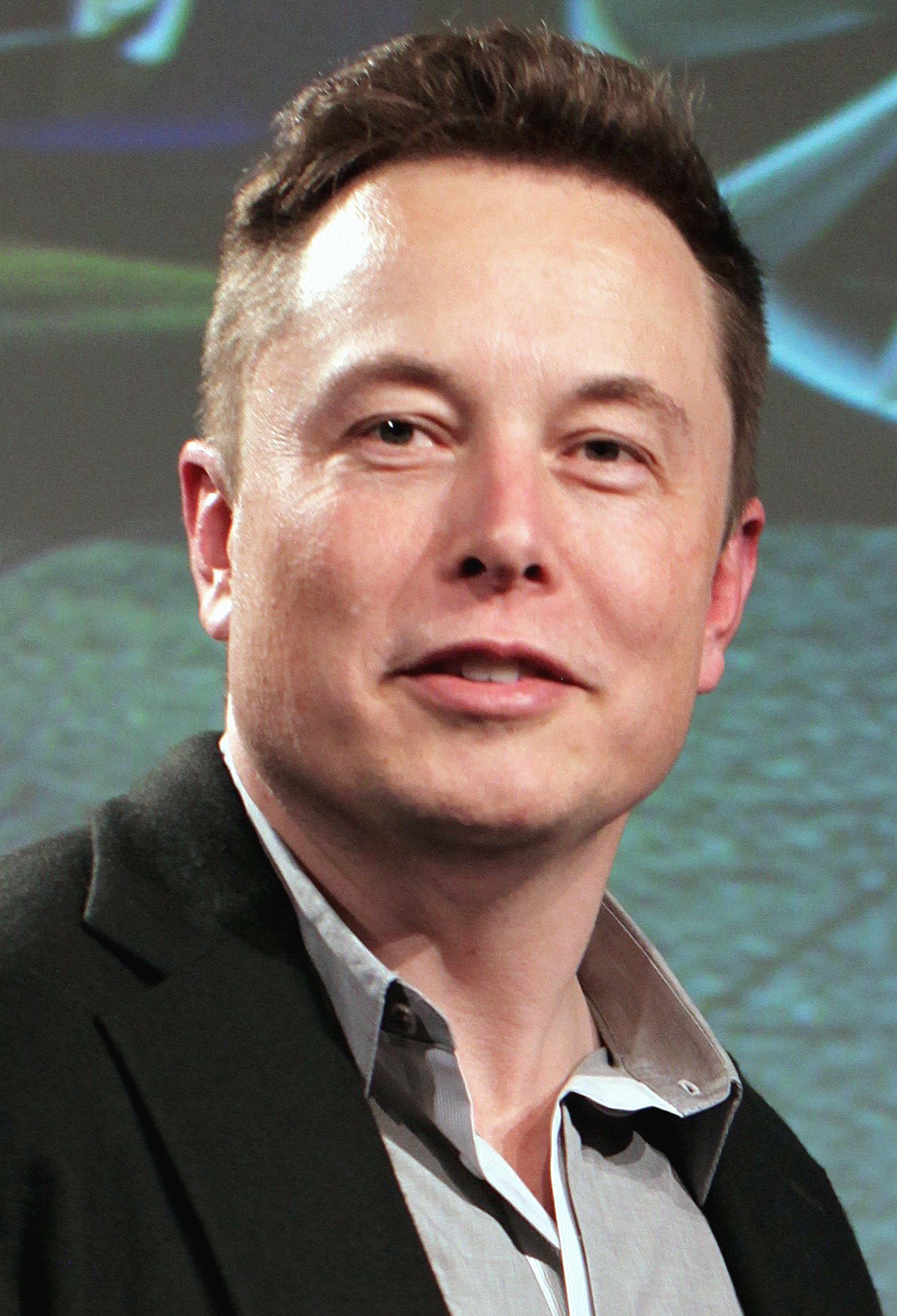
The spark was not a SoftBank announcement but a rumor from the credit markets: podcast host and former Musk adviser Katie Miller shared a report that a mysterious seller was seeking to offload about $500 million of data center loans in one block, including a $25 million financing stake tied to a large data center campus in New Mexico — part of the Stargate project jointly pushed by OpenAI, SoftBank and Oracle, and a signature undertaking of the Trump administration. Musk seized on it to claim SoftBank was “defaulting on their turbine orders” — offering no internal evidence and no supplier statement.
Nikkei Plunges 5.96%: SoftBank Is the Biggest Drag
The damage did not stop at SoftBank. On November 6 the Nikkei 225 crashed 3,643.13 points (5.96%) to close at 57,434.77 — the third-largest point drop in its history and its first close below 60,000 in months. SoftBank alone accounted for about 349 points of the decline, the biggest single drag of the day. Measured from its record close of 72,366 on June 25, the index has retreated about 20%, technically entering a bear market. For Japanese retail investors, this is no longer a tech story unfolding in the U.S. — it is a loss reflected directly in their own holdings.
Musk’s feud with Stargate runs long. When the project was unveiled in January 2025 — promising $500 billion over four years for OpenAI’s AI infrastructure — Musk repeatedly posted that “they don’t actually have the money.” This time he aimed squarely at SoftBank’s delivery capacity. The market is so fragile because gas turbines are the most rigid link in the capital-spending chain: per S&P Global, lead times can run up to seven years amid supply tightness, and a lost production slot cannot be recovered by simply reordering next month.
The Earnings Bomb: A ¥597.2 Billion Special Loss
The real detonation came on November 10. SoftBank’s April–September results showed a net loss of ¥768 billion for the half, including a staggering ¥1.12 trillion net loss for the July–September quarter — versus a ¥2.5 trillion net profit a year earlier. More important, the earnings booked a ¥597.2 billion (about $3.8 billion) extraordinary loss after Silver Bands 7 — a subsidiary backed by SoftBank and its Vision Fund 2 — revised procurement plans for U.S. AI data center power equipment, explicitly including the PORTS-Pike campus in Pike County, Ohio.
The loss comprises ¥457 billion in non-refundable prepayments plus ¥140.2 billion in contract modification and settlement costs. Silver Bands 7’s related procurement payments from the prior fiscal year through end-September totaled ¥1.5009 trillion ($9.5 billion). SoftBank’s official line remains “project needs changed and procurement strategy was adjusted” — not an admission of default. But it means the gas turbine orders named in Musk’s post have indeed loosened, at a cost counted in hundreds of billions of yen. The episode has shifted from “an unverified internet post” to “a procurement adjustment already reflected in the financial statements.”
Inside Son’s Leverage Machine
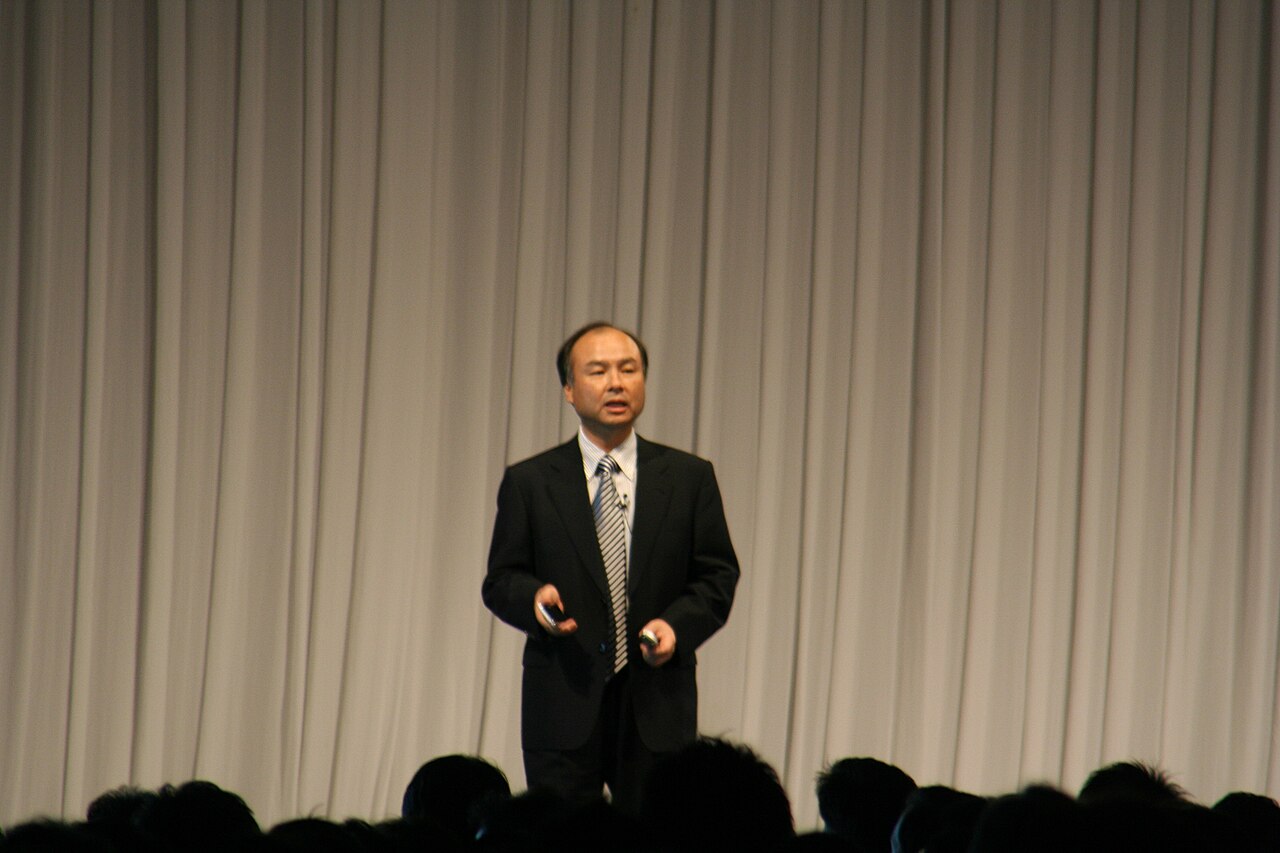
The panic is not baseless; beneath it sits leverage that has swollen at speed. In February, OpenAI completed a $110 billion round at a $730 billion pre-money valuation — the largest single venture financing in history — and Son put in $30 billion at a stroke. To raise the ammunition, SoftBank pledged Arm shares for a margin loan of up to $25 billion, raised about $7.7 billion against its Japanese telecom subsidiary’s shares, signed a $40 billion bridge loan in March at roughly SOFR+250bp (about 6.1%) maturing March 2027, issued $11.1 billion of high-yield bonds in September (longest tranche coupon 9.75%), and sold ¥1 trillion of seven-year retail bonds in Japan at 4.3%–4.9%. It also liquidated its Nvidia stake, trimmed T-Mobile and sold out of Alibaba — plowing everything into OpenAI.
To date SoftBank has invested a cumulative $64.6 billion in OpenAI for a stake of about 13% — Son’s largest single bet ever. The price is an increasingly strained balance sheet: net interest-bearing debt stood at ¥10.8 trillion at end-June, 1.6 times the ¥6.6 trillion a year earlier; consolidated interest-bearing debt climbed to ¥32.59 trillion by end-September. SoftBank’s five-year CDS spread has widened to 466 basis points, the highest since October 2022. Most dangerous of all, the exit path is narrowing: OpenAI’s IPO has been pushed to 2027, while the interest on the debt supporting the position rolls over by the quarter.
Supply Chain Contradicts Musk? GE Vernova: No Customer Retreat
Public statements from the supply chain, however, do not match Musk’s account. On GE Vernova’s late-October earnings call, CEO Scott Strazik was asked whether any customers had halted business or sought to withdraw capacity reservations over financing difficulties. His answer: “No, we’re not seeing that at all… the target customer base we serve all have very strong balance sheets.” The company’s third-quarter orders hit $29.3 billion, up 96% year on year, with backlog rising to $197 billion — about 20% from data center customers. Strictly speaking, “adjusting procurement” and “defaulting on debt” are different things; but for the market, this was enough to prove the orders are no longer set in stone. The episode now sits in a three-way impasse: an unverified allegation, a vote of no confidence cast by the credit market with real money, and SoftBank’s own earnings — which never admitted default, yet booked the loss.
The First Domino of the AI Bubble Debate?
Macro pressure is amplifying everything. After the U.S. midterms, expectations of slower data center construction and tighter AI regulation intensified sharply: on November 5 the Nasdaq 100 plunged 6.4%, wiping out $2.3 trillion in its worst single day since March 2020. Microsoft’s gradual termination of some leases and decisions by private equity giants like Blackstone to halt or transfer data center assets have been read as cautionary signals of AI overbuilding. Primary-market sentiment is contracting too: Anthropic’s once-$2-trillion IPO ambition is now being discussed among investors at $1.2–$1.3 trillion, with some pushing for as low as $1.1 trillion.
Son, for his part, rejected bubble talk at June’s shareholder meeting — “any talk of a bubble is an insult to artificial intelligence” — and defined the bet as “a revolution 50 times the internet bubble” in a CNBC interview. From Alibaba to WeWork, he has never been a steady player; only this time he has staked SoftBank’s entire balance sheet, along with high-interest debt yielding close to 10%. Whether Musk’s “Default” was true almost no longer matters: three separate threads all point in the same direction — and that is more worth heeding than any single claim.
Conclusion: What to Watch Next
Three things matter from here: whether SoftBank can keep refinancing channels open before the bridge loan matures in March 2027; whether OpenAI’s IPO timetable slips again; and whether permitting thresholds and construction moratorium threats escalate in the states — 41% of planned data center expansion is concentrated in jurisdictions whose politics are shifting Democratic. The deeper lesson of this storm: the AI arms race narrative is turning from “who buys the most” to “whose money lasts the longest.” Son’s gamble of the century is just entering deep water.