35 Countries Told to Pick a Side: The AI Race Enters the Era of Blocs
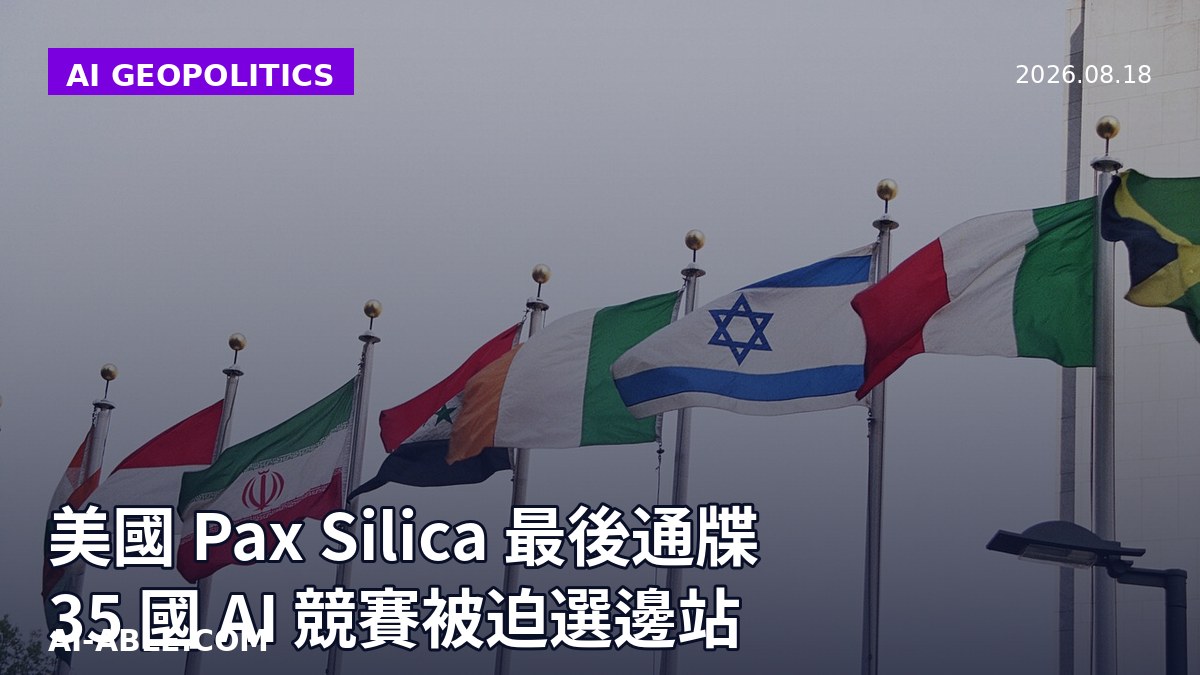
According to an internal State Department draft obtained by Reuters, the United States is preparing to warn 35 partner nations that signed the “AI Opportunity Statement” in June: stay inside the Washington-led Pax Silica AI coalition, or join Beijing’s rival framework — but you cannot do both. The undated draft letter marks the moment the global AI race formally leapt from technology and commerce into open diplomatic confrontation.
For longtime observers of AI geopolitics, this move was hardly a surprise. Launched in late 2025, the Pax Silica initiative aims to build a secure supply-chain alliance for AI models, semiconductors, and critical minerals. China, meanwhile, has been aggressively courting the Global South with “AI diplomacy,” using open-weight models and infrastructure exports as leverage. A single letter has now drawn the line between the two blocs.
What Is Pax Silica? From Supply-Chain Club to Loyalty Test
Pax Silica is not a technical standards body. It is fundamentally a supply-chain security pact: members gain priority access to AI chips, model weights, and critical minerals, in exchange for institutional alignment with the U.S.-led technology system. Italy formally signed a cooperation agreement in late July. The Philippines is evaluating a Pax Silica AI hub at New Clark City — a proposal that has triggered fierce budget debates in Manila.
This week’s diplomatic offensive, however, redefines Pax Silica from “join for benefits” to “face consequences for straddling.” According to reports, the draft letter explicitly warns that countries simultaneously participating in Chinese AI frameworks could be expelled from the U.S.-led coalition. China’s embassy in Washington responded swiftly, opposing the “politicization” of trade and technology and warning such moves would “stifle global AI advances.”
Why Force the Issue Now? Three Driving Forces
First, open-weight models changed the bargaining structure. Chinese open-weight models — from Kimi K3 to Z.ai’s GLM series — are penetrating the Global South at speed, handing Beijing a “technology access” card in diplomacy. When technology itself becomes an allocatable diplomatic resource, bloc boundaries must be drawn early.
Second, export controls are showing diminishing returns. Nvidia CEO Jensen Huang has publicly called U.S. chip export controls a “failure,” as Huawei ramps up production and domestic substitution advances. Since technology diffusion can no longer be blocked, Washington is pivoting to blocking institutional dependency — the strategic logic behind the Pax Silica letter.

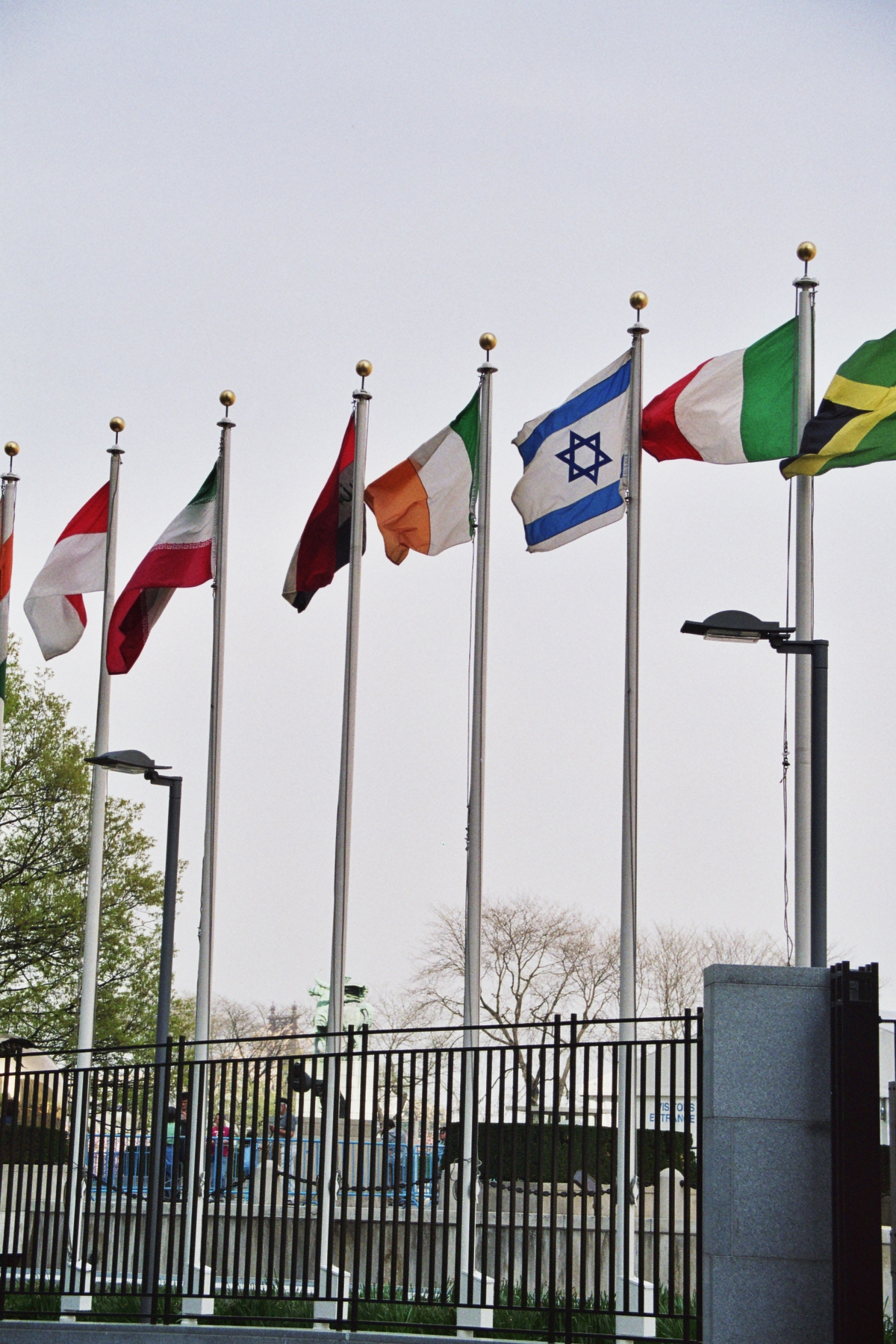
Third, the list of 35 nations is itself a sphere-of-influence map. The June signatories of the AI Opportunity Statement span Europe, Asia, and the Middle East — including key nodes like Italy, the Philippines, and the UAE. Most maintain deep trade ties with China simultaneously. The letter effectively demands they recalibrate their entire diplomatic center of gravity for the AI era.
The Middle Powers’ Dilemma: How to Price Opportunity Cost
For most developing countries, this is not an ideological choice but a cost-benefit calculation. The American bloc offers advanced chip access, AI infrastructure investment, and security cooperation. The Chinese bloc offers open-weight models, low-cost compute, and technology transfer with fewer political strings attached. The Philippine debate is emblematic: officials argue the Pax Silica hub’s lease income could “far outweigh” management costs, while critics question sovereignty and budget transparency.
The subtler risk lies in the enforcement cost of exclusivity. If Washington genuinely expels every country that also joins Chinese frameworks, the coalition could shrink from 35 nations to a core dozen — undermining Pax Silica’s legitimacy. Diplomatic analysts widely read the letter as a bargaining chip rather than a final ultimatum. But once a “loyalty test” goes public, walking it back becomes painfully difficult.

What It Means for Industry: Compliance Costs Are About to Rise
Multinational companies should prepare now. If Pax Silica exclusivity takes effect, firms operating AI infrastructure in both the U.S. and China will face a split technology stack: which bloc’s chips to train on, which sovereign cloud to deploy inference in, and how to comply with cross-border data rules — all upgraded from technical decisions to legal and geopolitical risk assessments. Supply-chain “collateral risk” is already visible in Wall Street’s concerns over the GPU collateral backing Nvidia’s $500 billion bond structure.
For developers and startups, bloc formation elevates the strategic value of open-source ecosystems — neutral, self-hostable models become the safe harbor for cross-bloc operations.
Conclusion: A “Berlin Wall Moment” for the AI Cold War?
An unsent letter is testing the diplomatic nerves of 35 nations. If Pax Silica’s loyalty clause is enforced, global AI governance will bid farewell to the era of “multilateral ambiguity” and enter a new phase of bloc-based exclusivity. For policymakers, this is the closing window to re-audit national AI dependency maps. For enterprises, this is the starting gun for dual-track compliance. The next battlefield of the AI race lies not in laboratories, but in the diplomatic cables of foreign ministries worldwide.