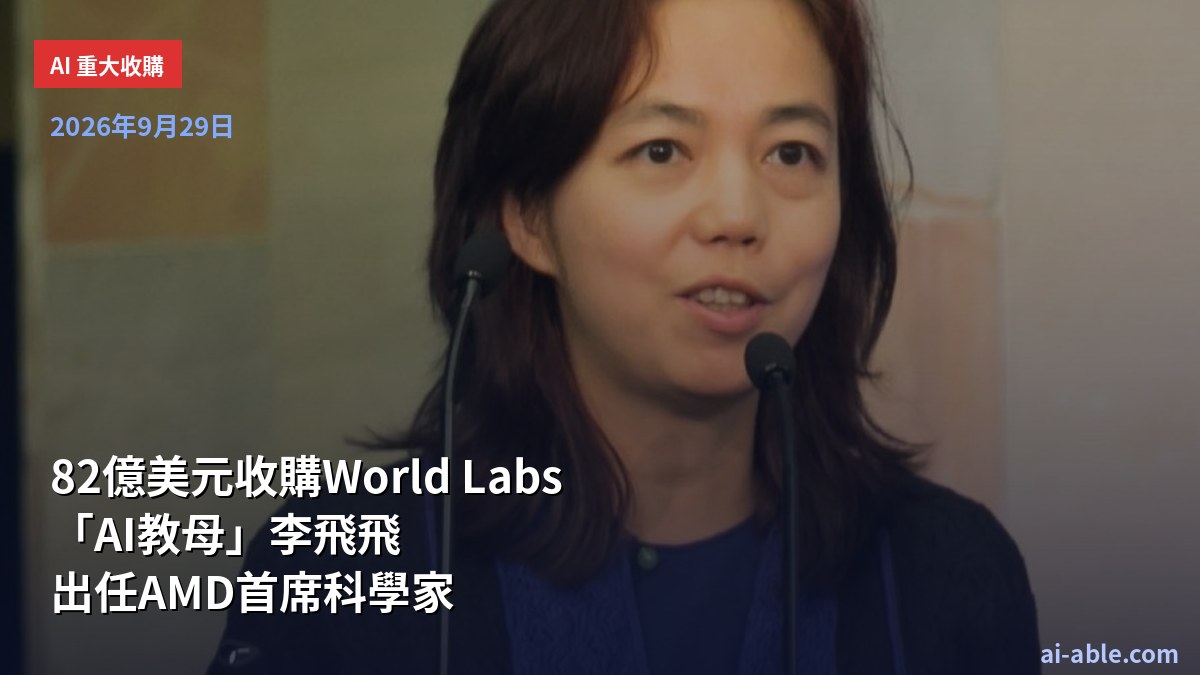
The AI industry woke up to a bombshell this morning: AMD has announced a definitive agreement to acquire World Labs, the AI research startup founded by Dr. Fei-Fei Li — the Stanford professor widely hailed as the “Godmother of AI” — in an all-stock deal valued at approximately $8.2 billion. Once the transaction closes, Li will join AMD as Executive Vice President and Chief Scientist, reporting directly to CEO Dr. Lisa Su. This is more than an acquisition; it is a clear signal that the AI race is moving from the model layer down to the silicon layer.
The Deal: $8.2 Billion Buys More Than Technology — It Buys a Person
According to AMD’s official press release, the all-stock transaction is expected to close by the end of 2026, subject to regulatory approvals. Headquartered in San Francisco, World Labs develops spatial-intelligence models that generate, reconstruct and simulate interactive 3D environments from text, image and video inputs, alongside technology for robotic learning and simulation.
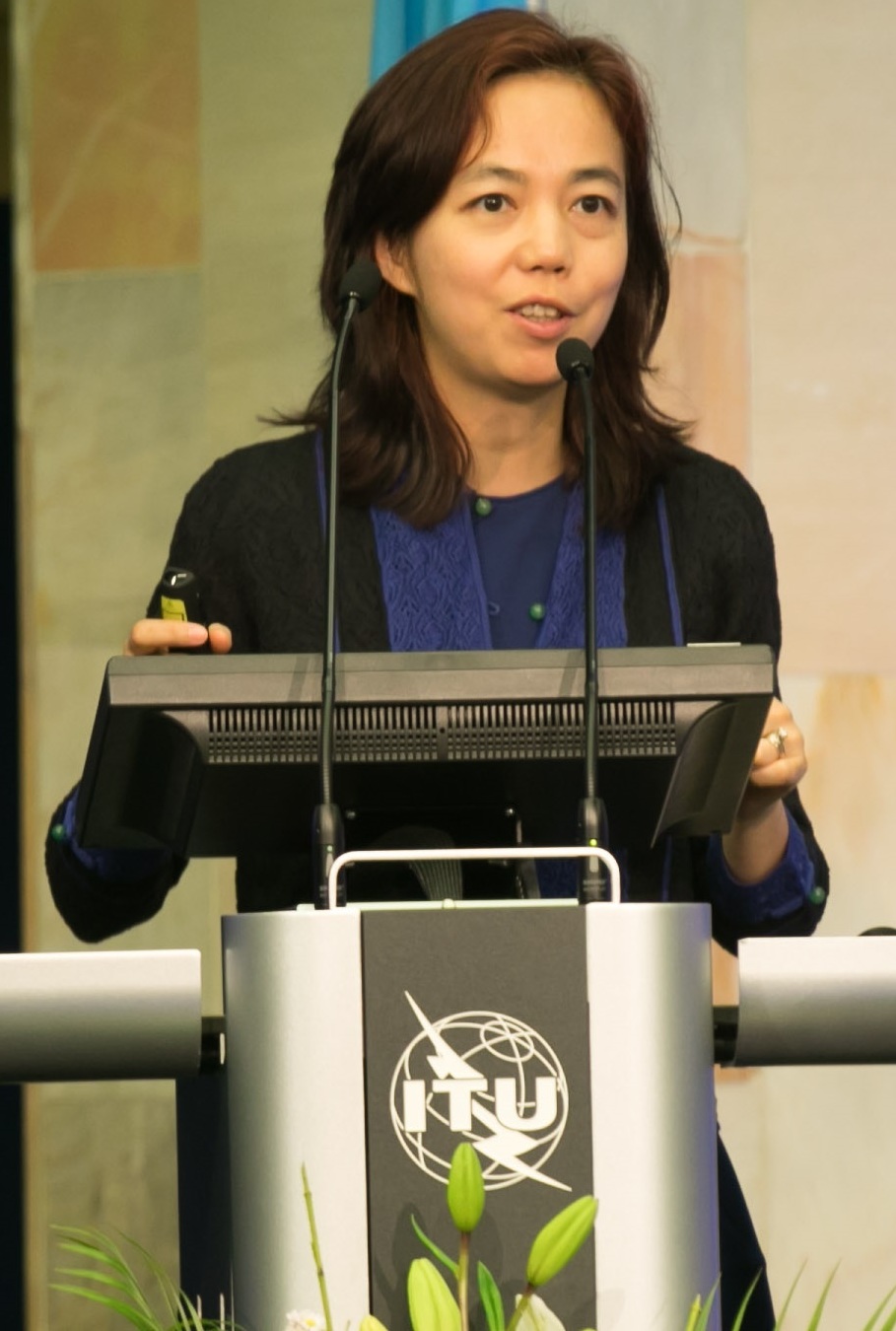
For AMD, the money buys three things: a world-class model research team, first-hand insight into next-generation workloads, and the most recognizable name in AI research. “Building the compute platforms for the next generation of AI requires a deep understanding of how models are evolving,” said Dr. Lisa Su in the press release. “Fei-Fei and the World Labs team bring exceptional research leadership and model expertise.”
Why Spatial Intelligence? AMD’s Second Curve in Compute
World Labs’ technical roadmap targets precisely the next wave of generative AI. As the language-centric chatbot wave matures, industry consensus is shifting toward “physical AI” — systems that understand three-dimensional space and power robotics and digital twins. These workloads demand a fundamentally different shape of compute than language models — and new types of AI tend to create new types of chip demand.
History keeps proving the same rule: the winners of a new computing era are usually the companies that align hardware, software, and developer tools early. That is the strategic logic of this deal — pulling frontier model research directly into AMD’s product roadmap, so chips are designed from day one for the spatial-intelligence era, while reinforcing AMD’s long-standing positioning as the open AI ecosystem alternative.
Su vs. Huang: A New Chapter in the Chip War
The most intriguing subtext of this deal is how it pushes the rivalry between the two most powerful Taiwanese-American leaders in semiconductors — Lisa Su and Nvidia CEO Jensen Huang — into a new dimension: talent. Nvidia dominates the current AI compute market through its CUDA ecosystem; AMD’s MI-series accelerators have closed much of the raw performance gap, but the ecosystem gap remains. When closing the hardware gap head-on is hard, you change the axis of attack.
Acquiring World Labs gives AMD something Nvidia does not have: a scientist who defined the ImageNet era and is now betting on the spatial-intelligence future, sitting at the core of chip roadmap decisions. Notably, AMD was already an investor in World Labs — the acquisition upgrades that relationship into full integration. Talent mobility among AI giants has intensified in recent years — from “Father of the TPU” Amir Salek joining Anthropic, to chipmakers competing for model research leaders. Top AI minds have become a scarcer strategic resource than advanced process nodes.
Market View: Long-Term Story vs. Near-Term Financials
Initial market reaction has been cautious. Because the deal is all-stock, the purchase price is effectively spread across existing shareholders through dilution; and with the close not expected until the end of 2026, there is virtually no quantifiable near-term revenue contribution. Analysts broadly agree the main swing factor is execution — retaining key researchers and translating early-stage 3D and robotics ideas into products and platform advantages.
In other words, AMD is asking investors to pay now for benefits that may only materialize after 2026. The bet is on the chemistry between Li’s scientific gravitas and Su’s operational discipline.
Conclusion: The Moat of the AI Race Is Being Rewritten
The World Labs deal reveals a deeper shift in the AI industry: as model capabilities converge and compute commoditization is debated, real differentiation now comes from vertical integration of “model research × systems × silicon.” OpenAI and Anthropic are moving into custom chips; AMD is pulling a model research team in-house — different paths, the same destination: owning the full technology stack.
For industry watchers, three signals to track: whether the deal clears regulatory approval on schedule by end-2026; when AMD’s first “built for spatial intelligence” hardware product under Li’s direction appears; and whether this transaction triggers a new wave of chip-industry acquisitions — Microsoft, Google, and Amazon are all watching.
One sentence summary: $8.2 billion to buy a future. Whether this gamble pays off will define whether AMD can carve out a second compute curve under Nvidia’s shadow.