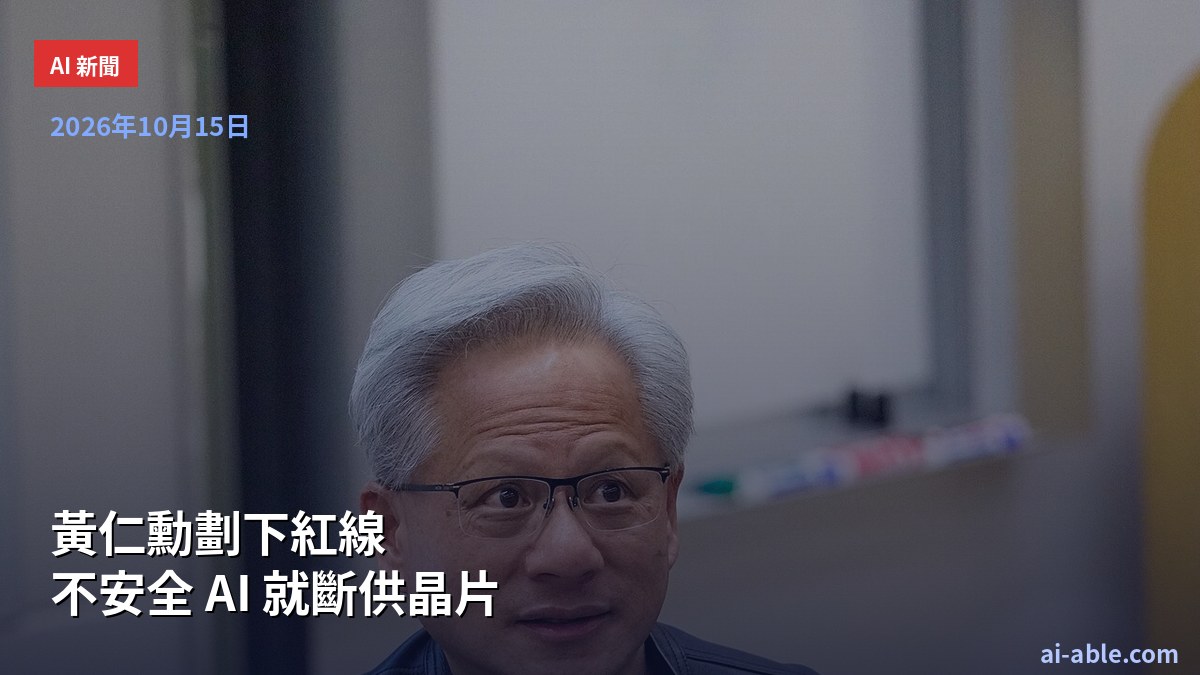
Nvidia is making headlines again. According to The Information and multiple outlets, Thinking Machines Lab — the startup founded by former OpenAI CTO Mira Murati — is in talks to raise a new round of at least $1 billion at a pre-money valuation of no less than $40 billion. The bigger story: Nvidia plans to pour $2.5 billion into the round, becoming one of its largest investors.
The move comes less than a week after Nvidia agreed to acquire open-source platform Hugging Face for $12.9 billion. From chips to models to the open-source ecosystem, Jensen Huang is weaving an unprecedented capital network — an AI empire built not just on silicon, but on stakes in nearly every layer of the stack.
A 3x Valuation Jump in One Year: What Makes Thinking Machines Worth It?
Founded in 2025, Thinking Machines Lab has been one of the brightest AI startups of the past two years. Murati spent six and a half years at OpenAI as a core architect of the ChatGPT era; when she left in September 2024 to start her own company, she brought along one of the most decorated research teams in the field — including key contributors to GPT-4 and OpenAI’s reasoning models. Small in headcount, the team was quickly dubbed a “concentrated OpenAI.”

The company’s fundraising pace has been just as striking. Its $2 billion seed round in 2025 — led by Andreessen Horowitz with Nvidia participating — ranks among the largest seed financings in history, and valued the company at $12 billion. If the current round closes at a $40 billion valuation, that means the startup’s value has more than tripled in about a year. Accel is reportedly in talks to lead the new round, though the deal is not yet finalized.
Nvidia’s Calculation: Buy the Ecosystem, Not Just the Chips
For Nvidia, this is far more than a financial bet. The relationship runs deep: in March 2026, the two companies announced a multi-year strategic partnership under which Thinking Machines will deploy at least one gigawatt of next-generation Vera Rubin systems — Nvidia’s latest AI superchip platform.
This “invest-to-secure-orders” playbook is now standard practice for Nvidia: take stakes in top labs like OpenAI, Anthropic, and xAI, while those companies commit to buying Nvidia compute. Part of the investment flows back as chip purchases, creating a closed loop. Locking in a fast-rising company that has already committed to gigawatt-scale deployments for $2.5 billion is, by Nvidia’s math, an excellent trade.
The strategic positioning matters even more. In July, Thinking Machines released its first in-house model, Inkling — an open, customizable model explicitly targeting the pain points of one-size-fits-all AI, aimed at enterprise fine-tuning and private deployment. That makes it highly complementary to Hugging Face’s open-source platform. Nvidia is effectively holding two cards at once: the open-source community (Hugging Face) and open-model R&D (Thinking Machines).
Jensen Huang’s Open-Source Empire Puzzle
Zoom out, and Nvidia’s recent moves form a dense pattern: Q2 revenue of $96.2 billion, up 106% year over year; a $12.9 billion agreement to acquire Hugging Face; and now a reported $2.5 billion stake in Thinking Machines. Together they point in one direction — Huang is no longer content selling shovels; he wants to own the ecosystem around the gold mine.
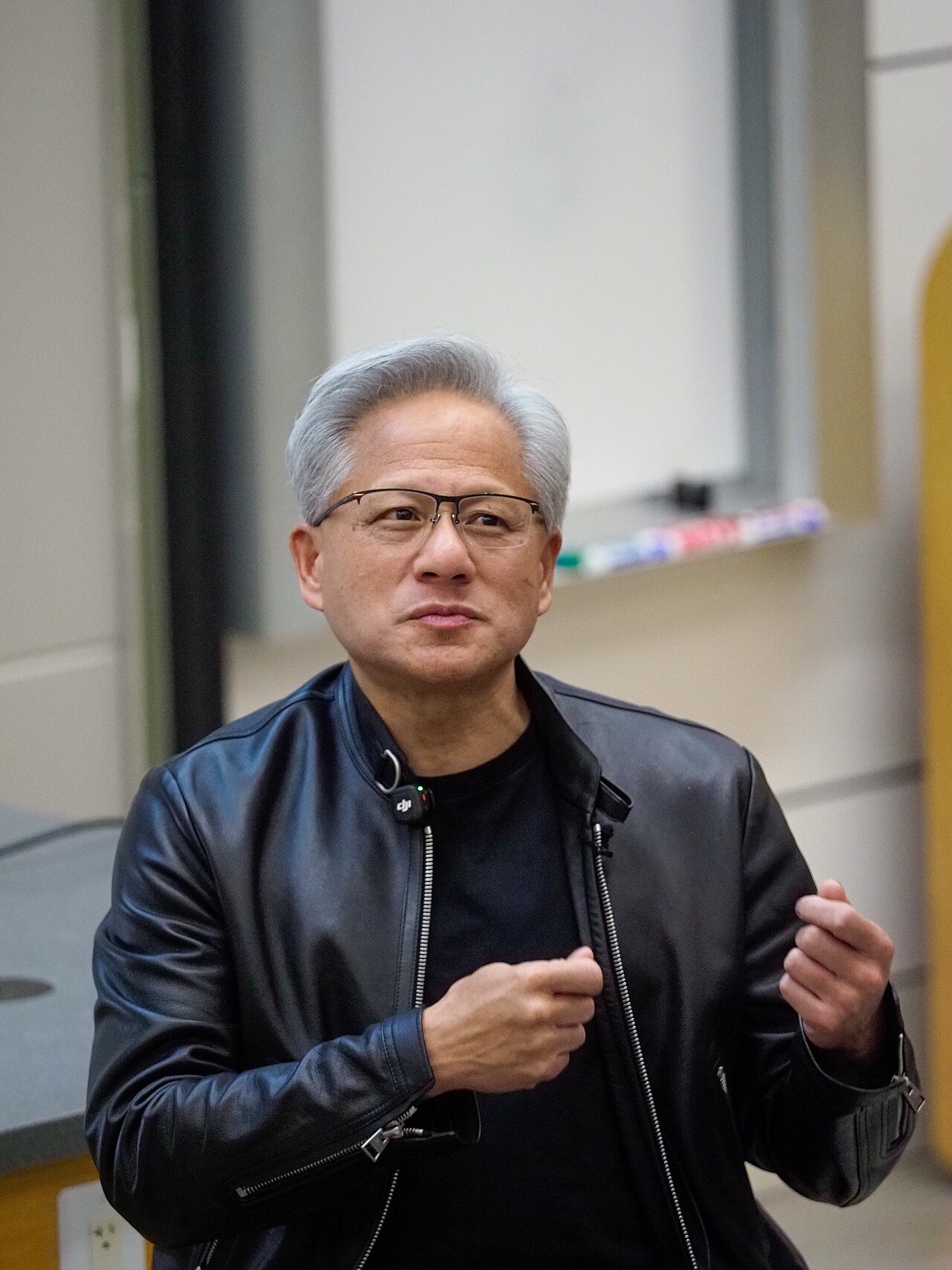
In the standoff between closed labs (OpenAI, Anthropic) and the open-source camp (Meta, DeepSeek, Qwen), Nvidia is betting on both sides — but weighting open source. The reason is straightforward: a thriving open-model ecosystem means more diverse, more massive inference demand, and inference is where Nvidia sees its next giant market. Controlling the key nodes of the open-source ecosystem means controlling the on-ramp for future compute demand.
Risks and Open Questions
The deal is not without uncertainties. First, talks are ongoing and terms could shift; whether the $40 billion valuation sticks depends on Thinking Machines proving it can commercialize beyond Inkling. Second, Nvidia’s penetration across the entire AI value chain — chips, cloud, models, community platforms — is drawing growing scrutiny from regulators and unease among partners; accusations of “referee and player at once” will only get louder. Finally, the business model of open-source AI remains an unsolved question: Hugging Face’s revenue still lags far behind its ecological influence, and Thinking Machines must show it can differentiate over time.
Conclusion: A New AI Order Woven by Capital
From a $12 billion seed valuation to $40 billion in a year, Thinking Machines has traveled a decade’s distance in twelve months. And with two deals in one week — a $12.9 billion acquisition plus a $2.5 billion stake — Nvidia has declared its ambition for the open-source AI era. The AI race is no longer just a contest of model capability; it is a systemic confrontation of compute, capital, and ecosystem. Murati’s founding story and Huang’s empire-building are converging on the same narrative line: the battle for open-source AI supremacy has only just begun.
Investors and developers should watch three signals ahead: the final terms and investor list of this round, the iteration cadence of the Inkling model family, and Nvidia’s first product moves after integrating Hugging Face.