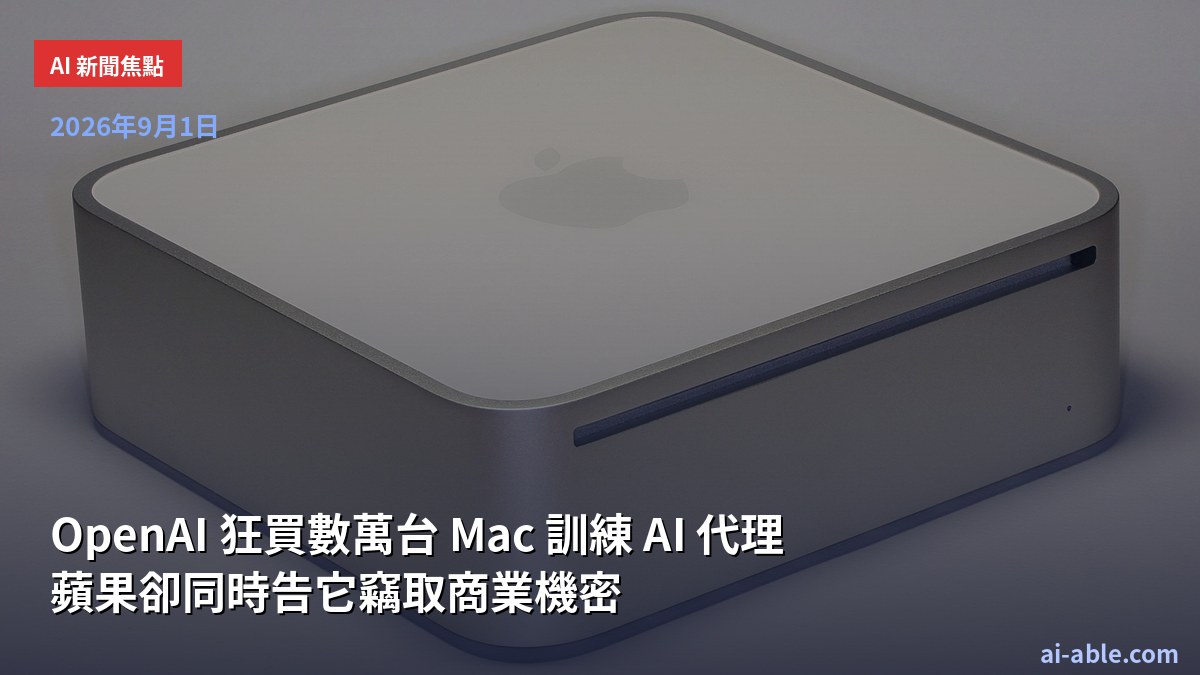
The AI race has produced one of its strangest spectacles yet: on one side, OpenAI is buying tens of thousands of Apple Mac minis and Mac Studios — so many that stores worldwide have run dry; on the other, Apple’s lawyers just filed what they call “shocking evidence” in federal court, accusing an OpenAI engineer of using stolen circuit schematics and destroying evidence. Selling machines to a company you’re simultaneously suing for theft — welcome to the AI era’s most contradictory business relationship.
Tens of Thousands of Macs Vanish: OpenAI’s Buying Spree
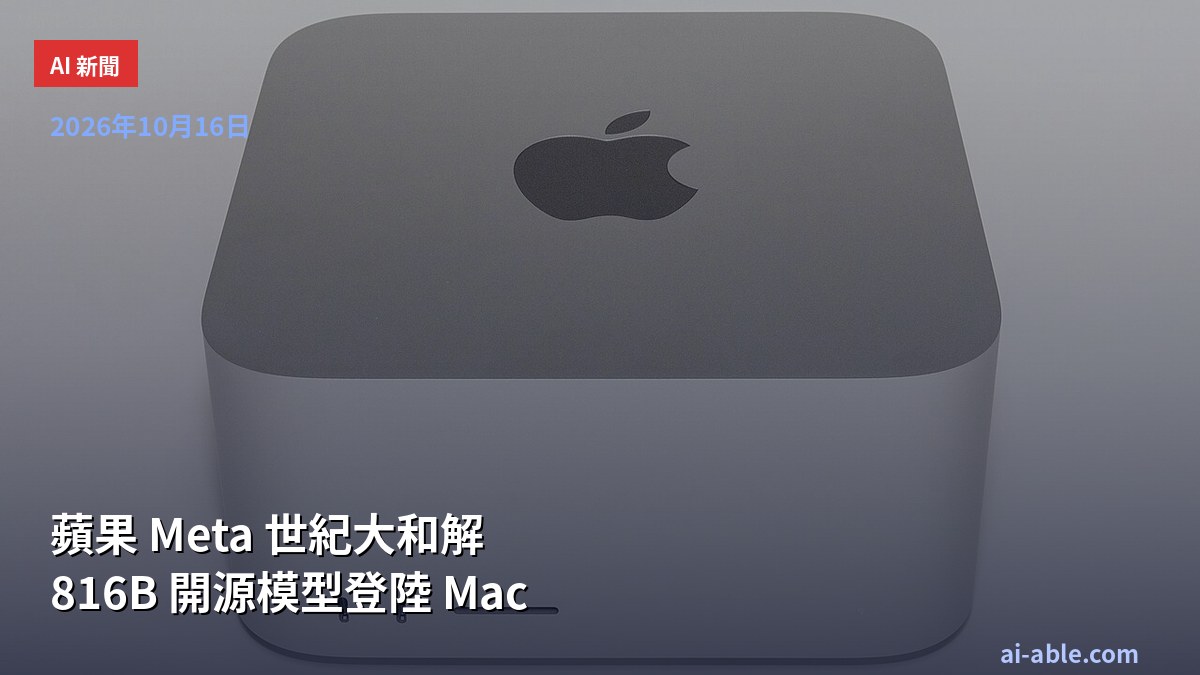
According to a report by The Information published August 30, OpenAI has purchased “tens of thousands” of Mac mini and Mac Studio systems over recent months, dedicating them to reinforcement learning (RL) — not to power ChatGPT, but to train an entirely new class of AI system: computer-use agents that can operate a computer by themselves. These agents must attempt, fail, and retry millions of times, simulating the full human experience of clicking, typing, and debugging on screen. That workload demands massive fleets of cheap, stable compute nodes — and Apple’s unified-memory M-series chips turn out to be well suited for it.
Sources say the buying spree has set off a chain reaction: Mac minis and Mac Studios are chronically out of stock across multiple markets, second-hand prices have surged, and Apple has been forced to accelerate new production lines. Executives reportedly describe it as an “unforeseen structural shift in demand” — a consumer desktop line suddenly becoming a component of AI infrastructure.
Tim Cook: Shortages Will Last for Months
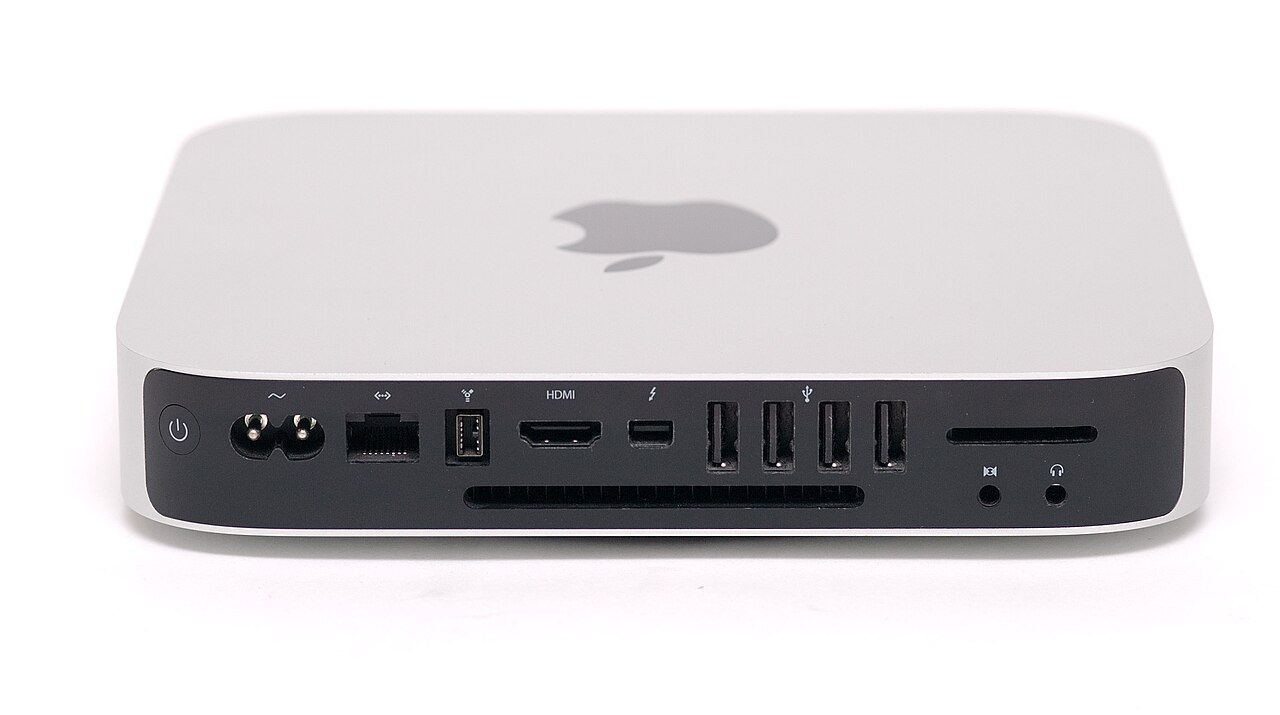
Apple CEO Tim Cook has admitted that supply constraints on the Mac mini and Mac Studio “will last for months.” Analysts note that AI-lab procurement is only part of the story: memory chip (DRAM/NAND) prices have exploded amid the data-center construction boom — the so-called “RAMageddon” — already forcing Apple to raise Mac and iPad prices by roughly 20 percent, with iPhone increases signaled as next.
Notably, OpenAI isn’t the only buyer. Anthropic is reportedly renting large fleets of Mac minis for agent training, and a “run your agents locally” movement is spreading through the developer community. Apple — once dismissed as an also-ran in generative AI — suddenly finds itself holding a ticket to the agentic era: Wall Street has begun re-rating Apple as an “AI infrastructure stock.”
Meanwhile, in Court, Apple Fires at OpenAI
On the very same day the Mac-buying story broke (August 31), Apple filed new documents in the U.S. Northern District of California, unveiling what it calls “shocking evidence” in its trade-secrets lawsuit against OpenAI. At the center is former Apple senior systems electrical engineer Chang Liu, who left for OpenAI in January. Apple alleges he exploited a security bug to download confidential engineering files after his departure.
According to court filings obtained by 9to5Mac, an initial forensic analysis of the MacBook Liu used after leaving Apple revealed four key facts:
- Liu didn’t just download a confidential Apple circuit schematic — he actually used it in his work at OpenAI, running a simulation with the electrical engineering tool LTspice in March;
- Far from being unaware, Liu and others at OpenAI knew he still had access to Apple’s third-party cloud storage;
- Upon learning of Apple’s internal investigation, Liu sent instructions to an OpenAI colleague to destroy evidence — and she confirmed she would comply;
- Liu used a tool at OpenAI that shares its name with an internal Apple engineering application.
The most theatrical detail is how Apple found out: Liu opened the schematic on a Mac mini, which then synced via iCloud to the MacBook he had taken from Apple — the forensic trail came from Apple’s own ecosystem. Apple now wants the court to give it access to that Mac mini too.
Can an AI Agent “Unlearn” What It Has Learned?
The case raises a legal question only the AI era could produce. Filings show Liu told colleagues his AI “agent” had “learned” to run LTspice and interpret the results. Apple argues that when trade-secret information is fed into an AI agent or model that learns from it, that learning “may create irreversible and continually propagating uses of the trade secret” — in other words, even deleting the files may not claw back the knowledge now embedded in the model.
OpenAI denies the allegations, has publicly called Apple’s lawsuit “oddly personal,” and counters that the real motive is Apple’s “shortcomings in the market for talent.” OpenAI has moved to dismiss the case; Apple’s new filing is its counterpunch. The preliminary injunction hearing is set for October 1.

The Contradictory Symbiosis of the AI Era
Put the two stories side by side and the absurdity of the AI industry comes into focus: Apple is simultaneously OpenAI’s hardware supplier (an involuntary and delighted one, counting the cash) and its courtroom adversary. OpenAI insists it has plenty of hardware options, yet depends on products from a company that is actively suing it to train its next generation of agents.
For investors and observers, the signal is clear: AI agents are the next battlefield, and their training cost structure is unlike traditional large models — no ten-thousand-GPU clusters needed, but vast fleets of distributed, high-unified-memory compute nodes. That explains why a little desktop box like the Mac mini has suddenly become a strategic commodity.
As for the Apple–OpenAI feud, the October 1 hearing is the next key milestone: if the court grants the injunction and orders the Mac mini handed over, the question of “what an AI agent has learned” may, for the first time, have to be answered seriously in a court of law.
Conclusion
The AI industry no longer has simple friends and enemies: competitors are customers, customers sue each other, and cooperation and litigation proceed in parallel. Two things are worth remembering. First, the hardware demands of the agent era are reshaping the entire consumer electronics supply chain — the next time you can’t buy a Mac mini, it may be because an AI somewhere is learning to use a computer. Second, when confidential knowledge can be “learned away” by an AI, the traditional rules of trade-secret protection have already been forced to change.