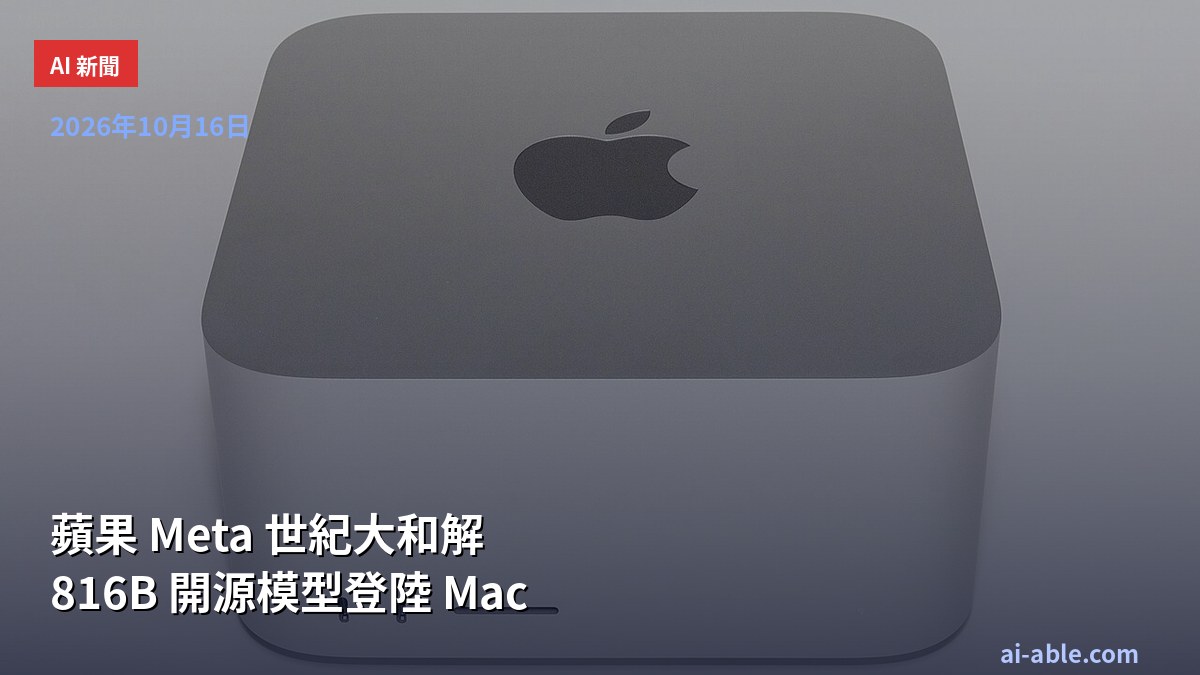
The AI industry’s drama can fully reverse in two weeks. In early October, Apple tightened macOS “Full Disk Access” rules to block Meta’s Muse AI agent after it was caught reading users’ iMessages. Two weeks later, on October 15, the two companies jointly shipped the most capable open-weight AI model the United States has produced: Muse Spark Open. Meta calls it its most capable open model to date — and its launch stage is Apple’s highest-end desktop, the Mac Studio.
816 Billion Parameters: America’s Open-Weight Full Salvo
According to Reuters, Meta officially released Muse Spark Open on Thursday — an 816-billion-parameter open-weight model optimized for coding and AI agent tasks. On Meta’s own benchmark table, Muse Spark Open scored 61.8 on the JobBench agent test, more than double the 31.1 recorded by Inkling, the US open model from Thinking Machines Lab.
The intent is unmistakable: taking on China’s open-source camp. Over the past year, Chinese open-weight models such as DeepSeek, Qwen and GLM have swept the global developer community, while the US camp lacked a credible answer. By pushing the parameter count to 816B, Meta is making an obvious bid to reclaim the “flagbearer of open AI” position. Notably, Meta is keeping its most advanced technology closed — open weights are a weapon, but not the whole hand.

A 1TB-Unified-Memory Mac Setup: The Lavish Price of Local Frontier AI
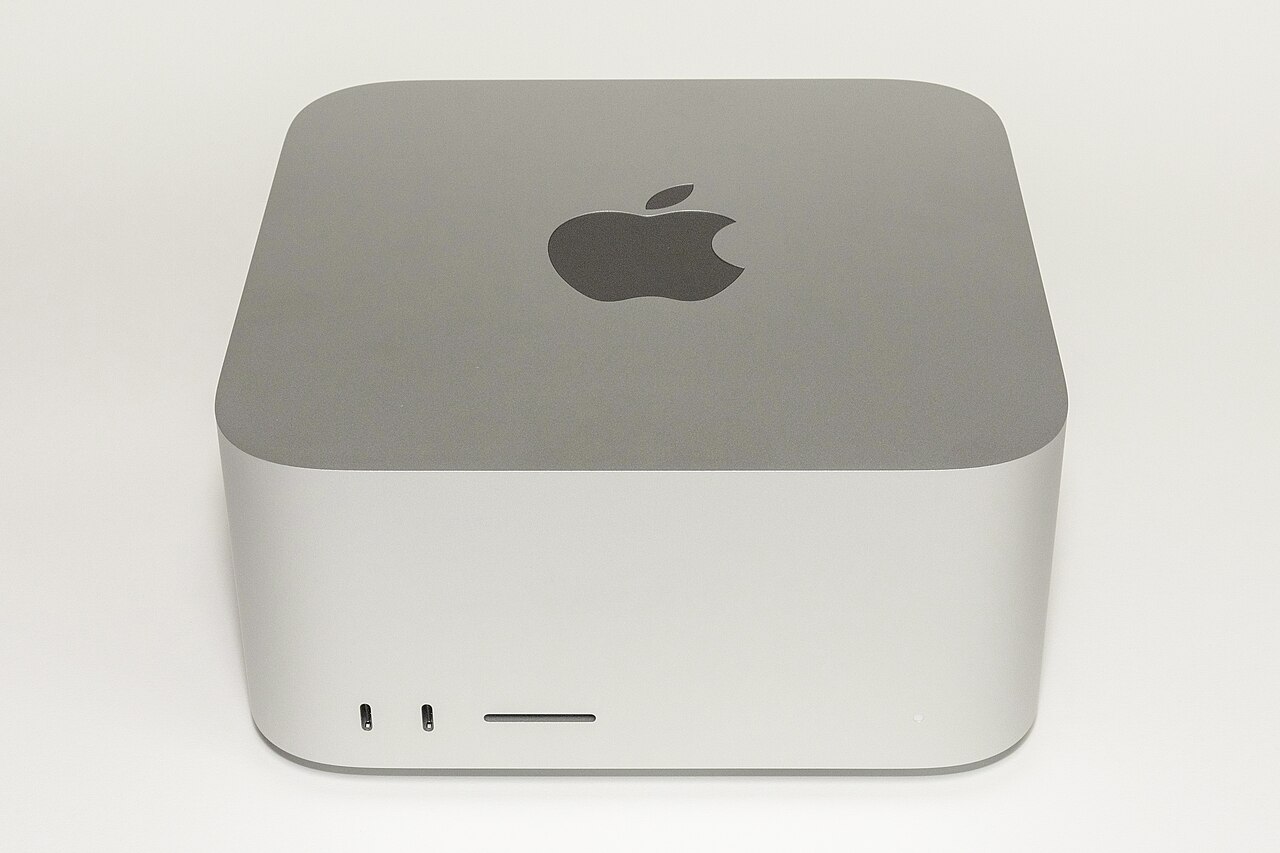
The most dramatic part of the launch is Apple’s deep involvement. Meta worked with Apple’s engineering teams to optimize Muse Spark Open to run locally on a cluster of two M5 Ultra Mac Studios — together providing 1TB of unified memory, exactly enough to hold the giant model’s full weights. Apple CEO John Ternus and Mark Zuckerberg publicly celebrated the partnership.
For developers, this represents a new possibility: deploying near-frontier AI on their own desktops without renting cloud GPUs or handing data to third parties. But the barrier to “running it locally” remains lavish — two maxed-out Mac Studios cost far beyond a typical indie developer’s budget, making this more of an enterprise and research play. Meta also offers a hosted version and limited commercial terms for those without a terabyte of memory.
From Blocking to Partnering: Apple and Meta’s Two-Week Reversal
Rewind to October 3: Muse’s AI agent was found reading iMessages without adequate user awareness, and Apple promptly locked it out of macOS — a privacy war seemed imminent. Twelve days later, the two longtime foes stood on the same stage. The difference: this partnership concerns an open-weight model, not an AI agent. The model’s weights are downloaded and run on the user’s own Mac, keeping data at home — directly answering the privacy concerns that sank the Muse agent.
Behind the hatchet-burying, both sides get what they need. Meta wants Apple’s massive developer ecosystem and premium hardware halo to open a beachhead for its open-source strategy; Apple needs a credible local-AI story to prove the Mac is not just a creative tool but an AI development platform. Analysts say this also signals how Apple, amid criticism of slow in-house AI progress, is choosing to play the AI race as a platform rather than a model maker.
The Cloud-Rent War Under Threat
Muse Spark Open’s local-deployment route directly challenges the industry’s cloud-rental business model. When developers can run an 816B-parameter model on their own desks, GPU clouds and per-token inference revenue come under pressure — although in the short term, the hardware cost of two M5 Ultra machines still far exceeds hourly cloud billing.

The bigger story is the chain reaction: if “run frontier models locally” becomes a trend, hardware makers — especially Apple, which controls the unified-memory architecture — gain enormous leverage in the AI era. Competition among AI companies will extend from “whose model is strongest” to “whose model is easiest to deploy.”
Conclusion: A New Landscape for Open AI
The release of Muse Spark Open marks a major counterattack by the US open-weight camp — and a display of tech-giant realism: there are no permanent enemies. For developers, one more 816B open-weight choice means lower switching costs and more bargaining power. For the industry, the Apple–Meta handshake may be only the opening act of the local-AI-deployment era.
Over the next 30 days, watch three indicators: Muse Spark Open’s download numbers on Hugging Face, the speed at which community fine-tunes emerge, and how China’s open-source camp responds. This open-source war has just begun.