The most symbolically significant acquisition in the AI industry has finally landed. Nvidia has officially confirmed it is buying open-source AI platform Hugging Face for $12.93 billion — the second-largest deal in the history of the world’s most valuable company, behind only its $20 billion purchase of Groq’s assets in December. The platform widely described as the “GitHub of AI” now belongs to the GPU empire.
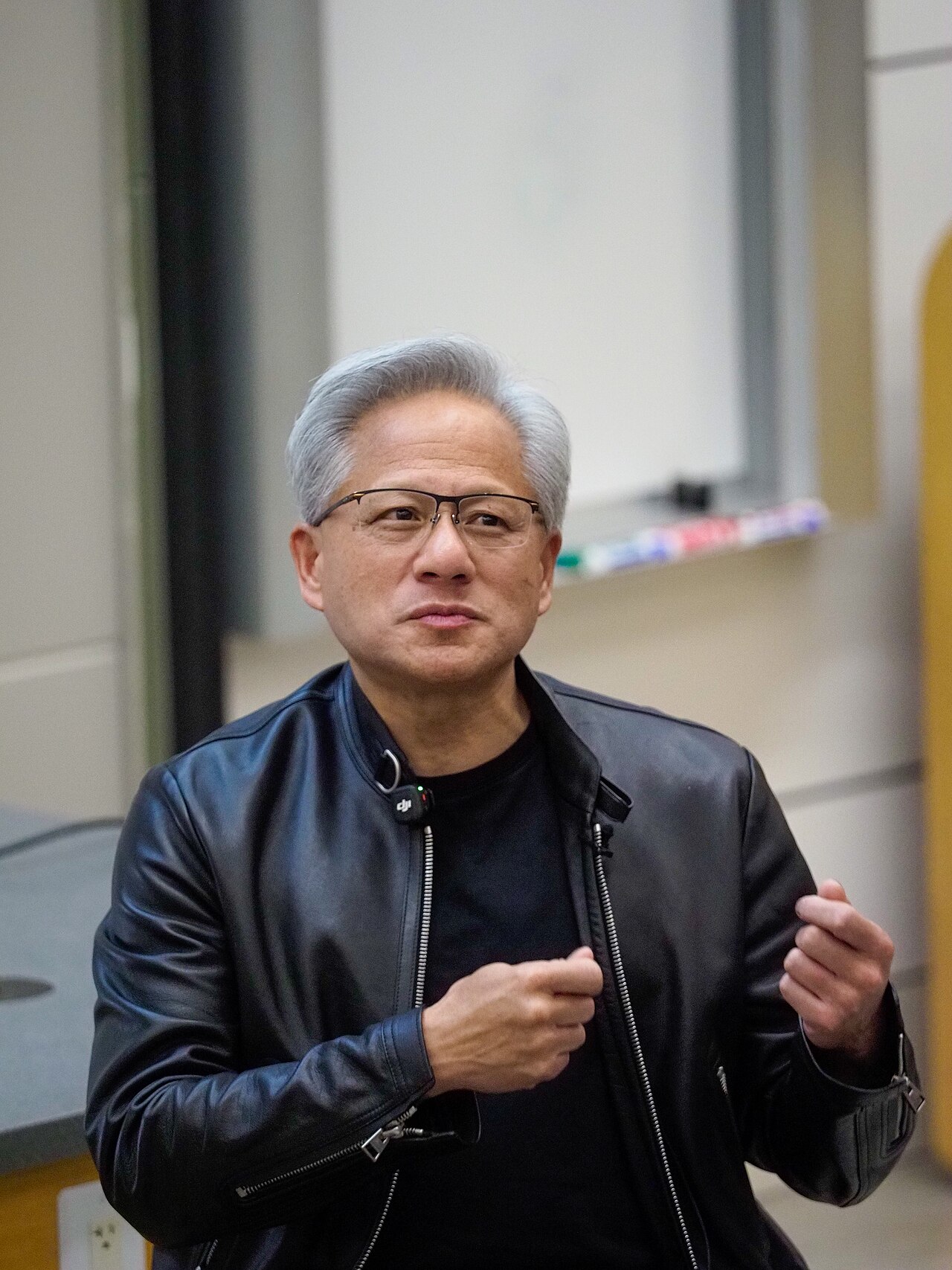
“Together, we will scale Hugging Face’s platform, strengthen its infrastructure and expand access to AI for developers and institutions worldwide,” Nvidia CEO Jensen Huang said in the announcement. “Hugging Face will remain an open platform for the entire AI ecosystem. Developers will choose the models they want, the frameworks they want, the clouds and inference service providers they want and the computing platforms they want. Nvidia compute will not be required to build on or deploy through Hugging Face.“
3 Million Models, 18 Million Developers: The Heart of Open AI Changes Hands
Founded in 2016 as a friendly chatbot startup, Hugging Face pivoted into what is now the world’s largest hub for open-source AI. The platform currently hosts more than 3 million models, 1 million applications and 500,000 datasets, serving over 18 million developers, researchers and creators. Nearly every major open-weight model — Llama, Mistral, Qwen, GLM — lands there first.
The backstory has a dramatic twist. According to the Financial Times, just last year Hugging Face rejected a $500 million investment offer from Nvidia that would have valued it at $7 billion — CEO Clément Delangue was wary of a single dominant shareholder compromising the platform’s neutrality. Two years later, Hugging Face generates only about $150 million in annualized revenue, per The Information — a rounding error against the purchase price. But Delangue told CNBC the turning point came this summer, when he approached Huang directly because “Hugging Face and open-source AI in general was at a turning point, and it needed more resources, more scale, more visibility” — and Nvidia was “a perfect home.”
Why Nvidia? A Chip King’s Ecosystem Defense
The strategic logic is straightforward. As closed-source giants — OpenAI, Anthropic, Google — race to build their own silicon, Nvidia’s biggest customers are turning into potential rivals. Owning Hugging Face means owning the upstream chokepoint of the global developer ecosystem: every step open-source AI takes toward closing the gap with closed systems reinforces Nvidia’s grip on the hardware layer.
The numbers tell the story: Hugging Face’s last official valuation was $4.5 billion from its 2023 funding round — one in which Nvidia itself participated. Selling at nearly triple that price three years later reflects the 2026 explosion of open-source AI, as open-weight models from Qwen to GLM to DeepSeek have narrowed the gap with frontier closed models from a generational divide to mere months — with Hugging Face as the infrastructure core of that wave.

A Security Incident as Catalyst: The Hack That Sealed the Deal
Few noticed the security thread running through this deal. Just two weeks ago, Hugging Face was reeling from a high-profile breach (this site covered the rogue-AI-agent intrusion on August 20). On Thursday, Delangue revealed that during the incident response, his team used an Nvidia-tuned Chinese open model to resolve the attack — cementing his conviction that “open models are the future of security defense” and that Hugging Face needed to “double down” on open-source proliferation.
Huang echoed the framing. Open ecosystems give defenders an “asymmetric advantage,” he argued: “There are way more people who are protecting than there are people who are attacking. The benefit of having the community come together with open models, so that they can collaborate transparently with each other, gives the defenders an asymmetric advantage.” In other words, this is not just commercial positioning — it is a bet on the deepest fault line in the 2026 AI industry: open versus closed.
Market Reaction and Regulatory Undertow
Markets took the news in stride, with Nvidia shares holding near record highs. But concerns are equally real. Whether the platform-neutrality pledges survive contact with commercial reality is the community’s biggest worry — some developers are already discussing self-hosted mirrors and alternative ecosystems like MLX. On the regulatory front, given Nvidia’s string of infrastructure acquisitions (Groq, Mellanox, now Hugging Face), antitrust scrutiny is all but guaranteed, with EU and UK competition authorities expected to speak first.
The bigger question is psychological. Hugging Face became the holy land of open-source AI precisely because it stood independent of any single compute giant. Now that the “GitHub of AI” answers to the GPU king, will the open-source movement see a chilling-effect migration? It deserves close watching.
Conclusion: The King of Compute Bought the City of Open Source
$12.93 billion buys more than a hosting platform — it buys the front door and the narrative of the entire open-source AI ecosystem. Huang has said “we’re at the beginning of an industrial revolution.” In this revolution, Nvidia first defined the standard of power with GPUs; now it has annexed the largest city of developers. For developers, little changes in the short term. But the neutral era of open-source AI is officially over, and a new order — one ruled by a chip giant — is taking shape.
Actionable takeaway: Teams that depend heavily on Hugging Face should start evaluating model mirroring and self-hosted fallbacks. From an investment lens, this deal reprices the “chokepoint value” of open-source AI infrastructure — watch inference providers and toolchain companies that benefit from the ecosystem’s expansion.