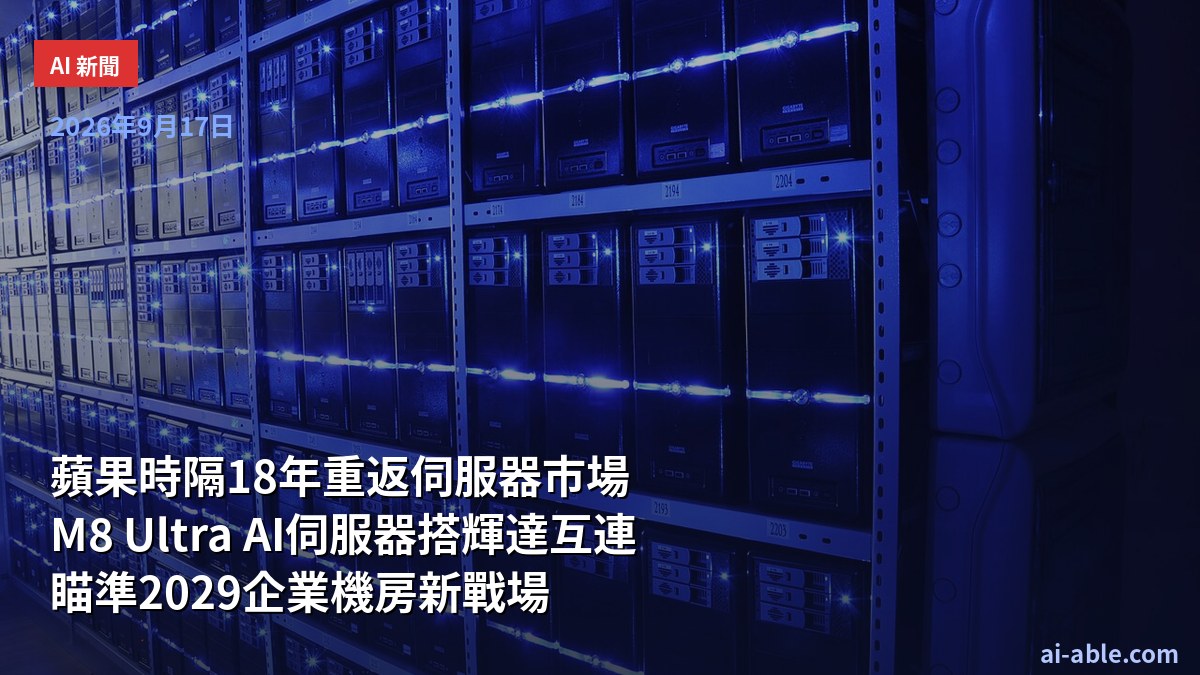
Eighteen years. That’s how long it has been since Apple discontinued the Xserve in 2011 and walked away from the server hardware business — until AI rewrote the calculus. The Information reported on Wednesday that Apple is developing an enterprise AI server built around its unannounced M8 Ultra chip, and has held talks with Nvidia to incorporate NVLink Fusion interconnect technology, targeting a 2029 launch.
This is not a routine product refresh. It’s a strategic tectonic shift: when OpenAI buys tens of thousands of Mac minis to train AI agents, and when Apple Silicon’s inference efficiency per watt becomes a widely acknowledged moat, Apple has finally decided to move that chip advantage from your desk into the enterprise machine room.
The Report: M8 Ultra On Board, Two or Four Chips
According to The Information, citing people familiar with the matter, the AI server would use Apple’s planned M8 Ultra chip — expected to be the most powerful processor the company has ever built. The product is positioned for AI developers, businesses, and government customers, targeting inference workloads rather than competing head-on with Nvidia in the Olympics-scale model-training arena.
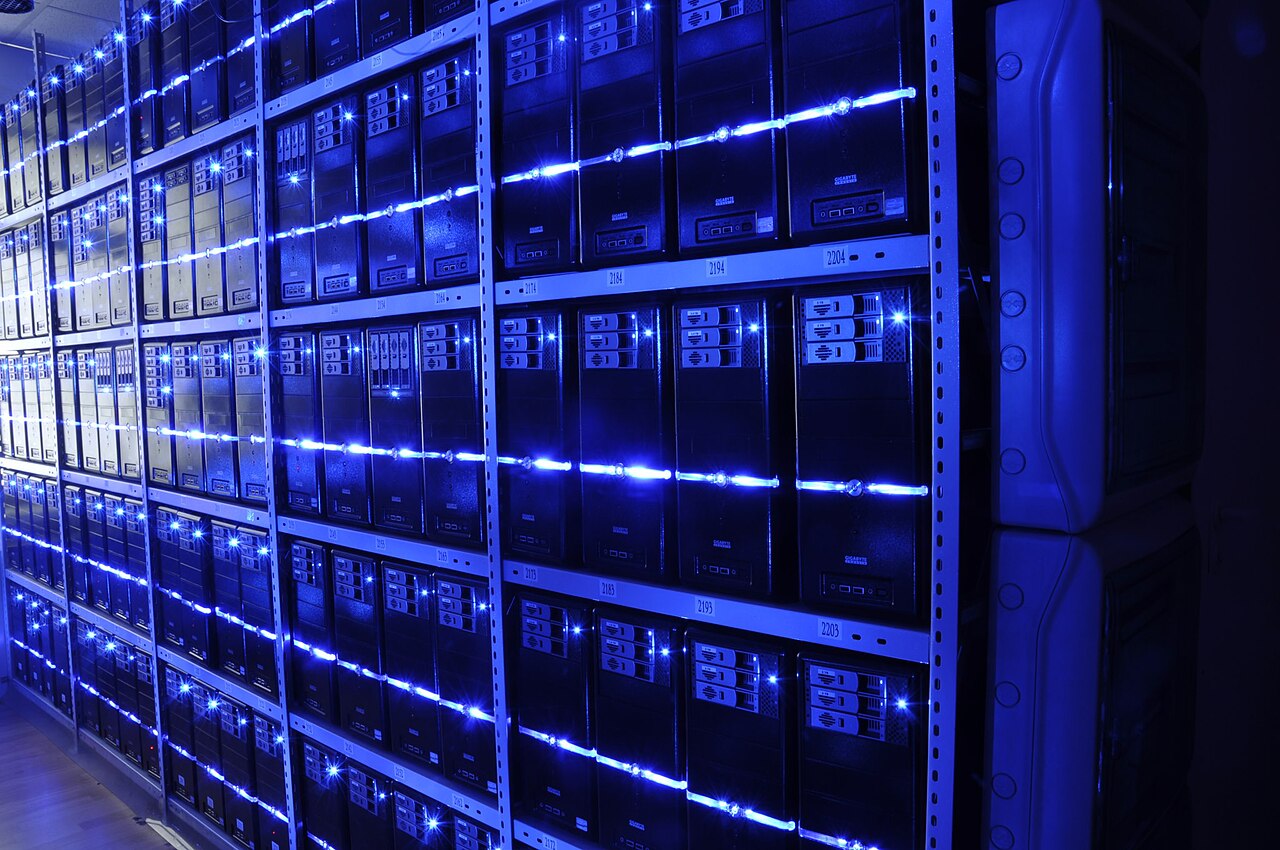
Sources say two configurations are under evaluation: a two-M8-Ultra version and a four-M8-Ultra version. Making multiple chips work as one requires high-bandwidth, low-latency interconnect — exactly where Nvidia’s NVLink Fusion comes in, letting chips “hold hands” into a unified compute pool. Reuters, MacRumors, Ars Technica and other outlets have since confirmed the report.
Why Now? The Apple Silicon Inference Advantage
Apple’s confidence in returning to servers stems from an extraordinary phenomenon of the past two years: customers voting with real money on Apple Silicon’s inference efficiency.
The most dramatic example is OpenAI itself. In early September, multiple outlets reported that OpenAI had bought “tens of thousands” of Mac minis to train AI agents, triggering a global Mac mini shortage — even as Apple was suing OpenAI for trade-secret theft. A customer suing you while scrambling to buy your machines is the best endorsement Apple Silicon could ask for.
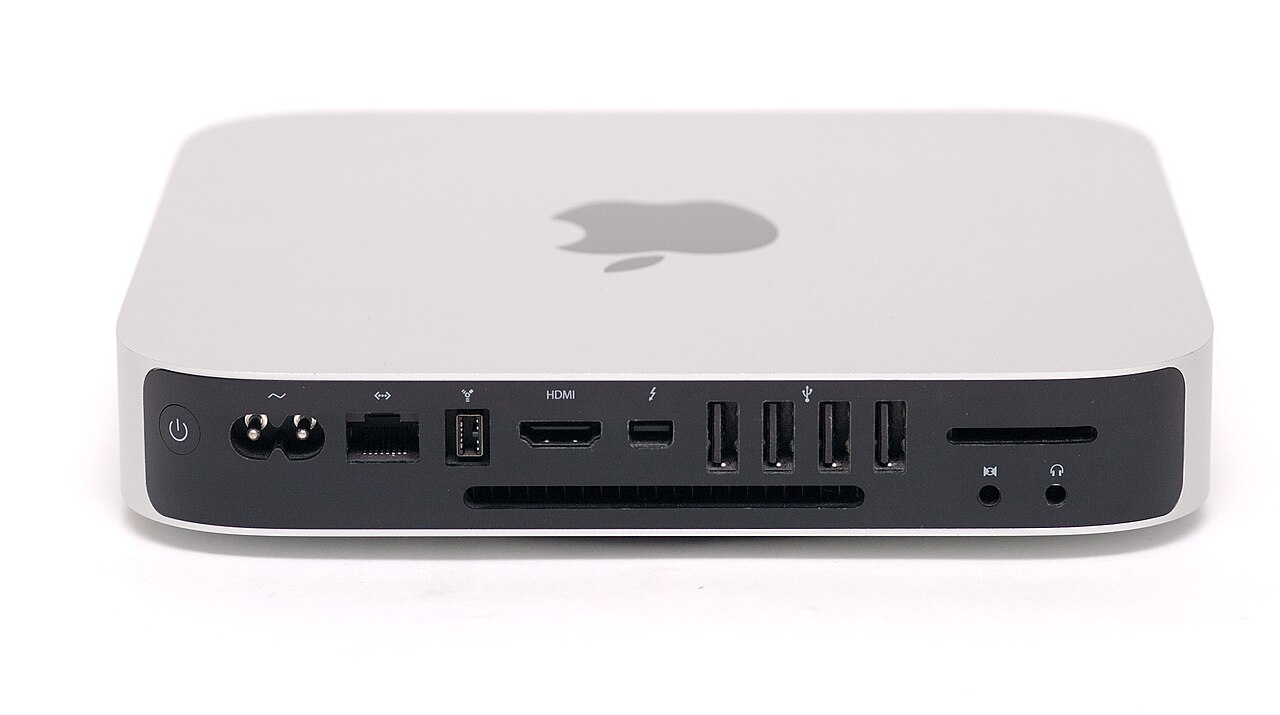
Industry analysts broadly agree that the M-series unified memory architecture and per-watt performance are far better suited to inference than traditional GPU servers — inference doesn’t need the fastest single-point compute; it needs to serve the most requests at the lowest cost. As AI shifts from “alchemy” (training) to “mass production” (inference), the inference market will dwarf the training market — and that is precisely the battlefield Apple knows best.
Dancing with Nvidia: The Enemy of My Enemy
The most intriguing part is the thaw between Apple and Nvidia, two companies with a long history of bad blood.
The feud dates back years: patent licensing disputes, courtroom clashes, and Nvidia’s demand for Apple sales data during litigation. After relations collapsed in the early 2010s, Apple froze Nvidia out of the Mac lineup for over a decade before going all-in on its own Apple Silicon in 2020. Sitting back down at the table over an AI server shows that pure engineering reality can shelve commercial grudges.

NVLink Fusion is the open version of Nvidia’s NVLink ecosystem introduced in 2025, allowing third-party CPUs and ASICs to plug into Nvidia’s interconnect fabric. For Apple, adopting a mature interconnect saves years of in-house development risk; for Nvidia — which earns roughly a fifth of its data-center revenue from networking gear, per Yahoo Finance — any expansion of the NVLink ecosystem is welcome, even when the customer is Apple.
Market Impact: The 2029 Variables
Markets reacted positively, with Apple shares rising on the news. But 2029 is a long way off, and several key variables remain:
- Configuration choice: The two-vs-four M8 Ultra trade-off shows Apple is still probing real customer demand — enterprise buyers want balance, not component-stacking.
- Ecosystem: AI server buyers care about the software stack. Apple must prove its toolchain can plug into the CUDA-dominated AI development world — harder than building the hardware itself.
- Competitive landscape: The 2029 inference market will pit Nvidia GPUs, AMD, Google TPUs, Amazon’s custom silicon, and Apple against each other — whether Apple’s per-watt cost advantage still holds then is the biggest open question.
Conclusion: The Next Act of the Chip Wars Happens in the Machine Room
The significance of this move extends far beyond one hardware product. It declares that Apple Silicon’s ambition is no longer confined to consumer devices — when inference cost decides which AI applications live or die, the company with the industry’s best performance-per-watt has no reason to leave machine-room money on the table.
For enterprises and developers, a strong new option in 2029 is good news; for investors, it’s the latest slice of Apple’s “services + infrastructure” narrative. Eighteen years ago, the Xserve lost to the x86 wave. Eighteen years later, Apple returns with its own silicon. The war in the machine room has just begun.