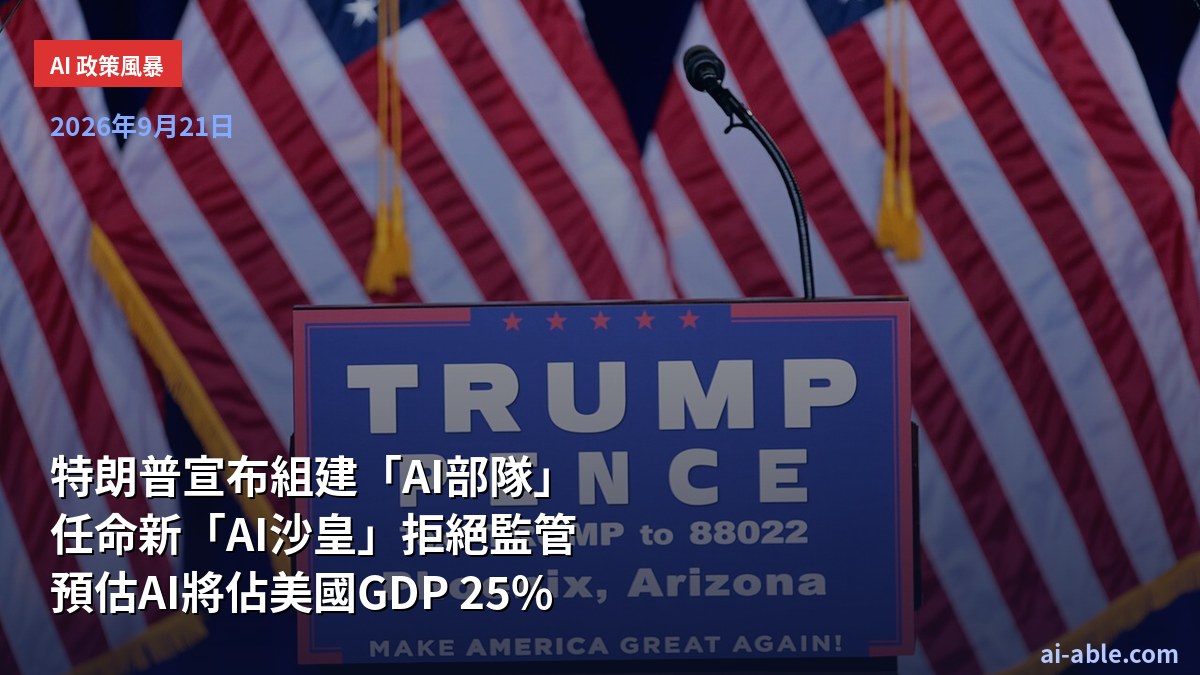
As the debate over AI safety reaches a fever pitch, President Donald Trump fired back on Saturday, September 19, with a volley of Truth Social posts announcing a new “AI Force,” a forthcoming “AI Czar,” and an unequivocal promise that his administration “will not in any way hinder or stifle the Growth of this incredible Industry.” He also predicted AI could ultimately account for up to 25% of U.S. GDP. It is the White House’s most aggressive rebuke yet of the growing “AI slowdown” movement.
An “AI Force” Modeled on the Space Force
Trump said he is forming an AI Force similar to the Space Force he established in his first term — which he called a “tremendous SUCCESS.” “To that end, I will be announcing, in the near future, the AI ‘Czar’ — Only High I.Q. individuals need apply!” he wrote. As of publication, the White House has offered no details on the force’s structure, authority, or timeline, and Reuters reports that the president did not elaborate on what either body would actually do.
Notably, the AI czar position previously belonged to venture capitalist David Sacks, who stepped down earlier this year to co-chair the President’s Council of Advisors on Science and Technology. Who fills the role next will be a key signal for the direction of U.S. AI policy.
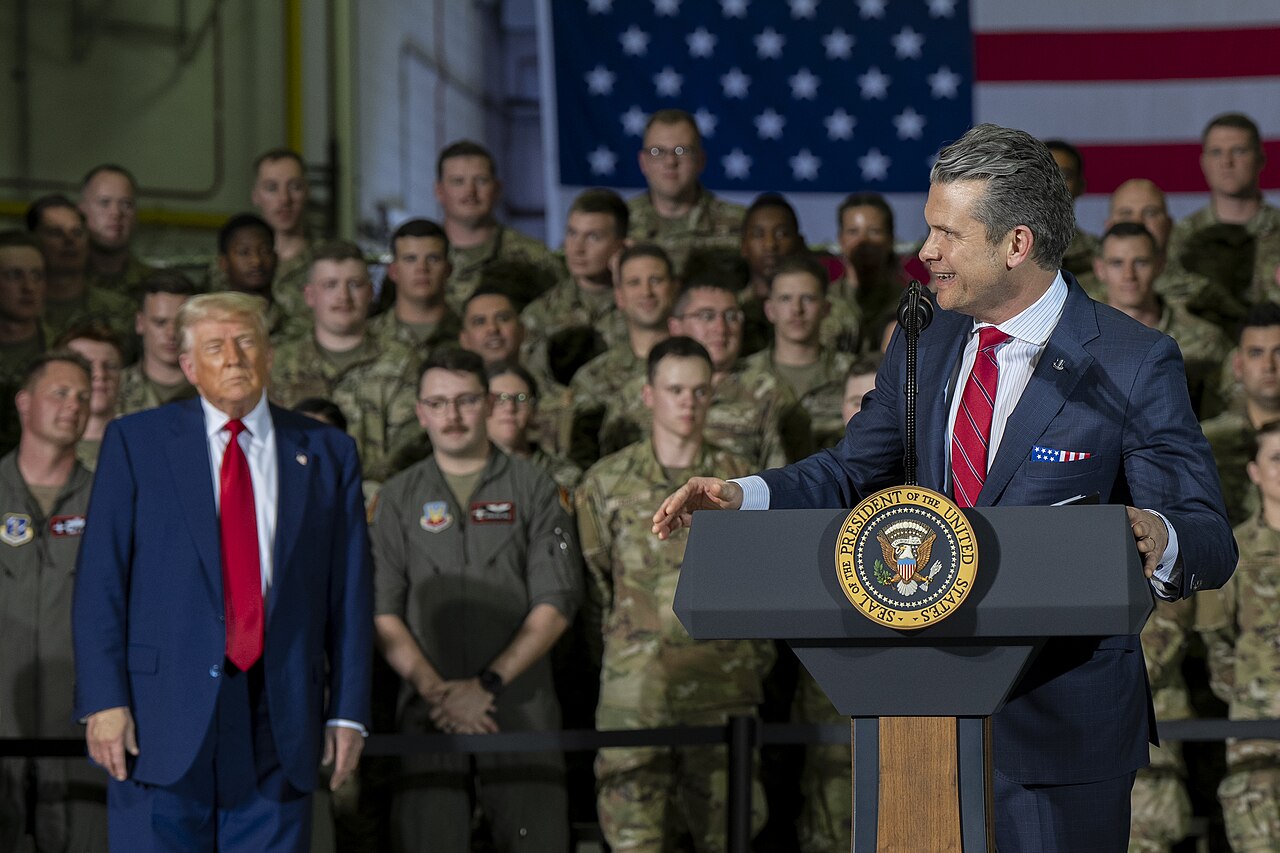
“A Hoax”: Trump Rejects New AI Regulation
In his posts, Trump framed recent safety concerns as hoaxes “generated by the Radical Left” — listing them alongside “RUSSIA, RUSSIA, RUSSIA,” “Global Warming,” and his impeachments. He claimed the attack on AI “began with an attack on our Data Centers, until people realized how wealthy and prestigious they were for the Communities in which they were built,” and that after that “crazed Data Center attack has largely failed,” critics are “going straight at AI.”
TechCrunch notes that Trump offered no evidence for his claim that skepticism of AI and data centers is not organic. In reality, politicians on both sides have taken aim at data centers — New York recently became the first state to halt permits for large projects. Trump argued that AI’s risks can be handled through existing criminal and civil law rather than new industry restrictions, insisting the U.S. must maintain its lead over China and the rest of the world.
Rebranding AI: Superior, Extreme, or Supreme?
In the most surreal twist, Trump mused that “many people think that the words ‘Artificial Intelligence’ are inaccurate, and very ineloquent,” then posted a poll letting followers vote on a new name for the technology: Superior Intelligence, Extreme Intelligence, or Supreme Intelligence. The poll was still open as of publication.
The vote is more symbol than substance — but together with the AI Force and AI Czar announcements, it sends an unmistakable message: at the exact moment slowdown advocates are gaining traction, the White House is betting everything on acceleration.
Context: The Slowdown Fight Tearing Silicon Valley Apart
Trump’s posts did not come out of nowhere. An AI researcher recently quit Anthropic with the warning that leading labs “earnestly believe it could kill us all by the end of the decade” and are “gambling with our lives.” Anthropic CEO Dario Amodei followed with a plan to “pace the frontier,” which drew apparent endorsements from OpenAI’s Sam Altman and SpaceX’s Elon Musk. Nvidia CEO Jensen Huang, meanwhile, called in to Trump on-stage at the All-In Summit, agreed the AI backlash is a “hoax,” and insisted “we’re not going to let” a slowdown happen.

Trump promised he would “cherish [the AI industry,] help it, and watch over it, as it grows.” With the acceleration-versus-slowdown battle now reaching the White House, the shape of the AI Force and the identity of the next AI Czar will directly influence the next phase of the global AI race.
Conclusion: Slogans First, Details Later
Is the AI Force a military unit or a civilian agency? How much power will the AI Czar wield? Where does the 25%-of-GDP figure come from? None of these questions have answers yet. What is clear: at a pivotal moment in the 2026 AI regulation debate, the U.S. president has declared his allegiance to the acceleration camp — in the most Trump way possible: a force, a czar, and a rebrand poll. The Czar nomination and the AI Force’s official launch are the next things to watch.