10 Million Views in 5 Days: AI Video’s “iPhone Moment”
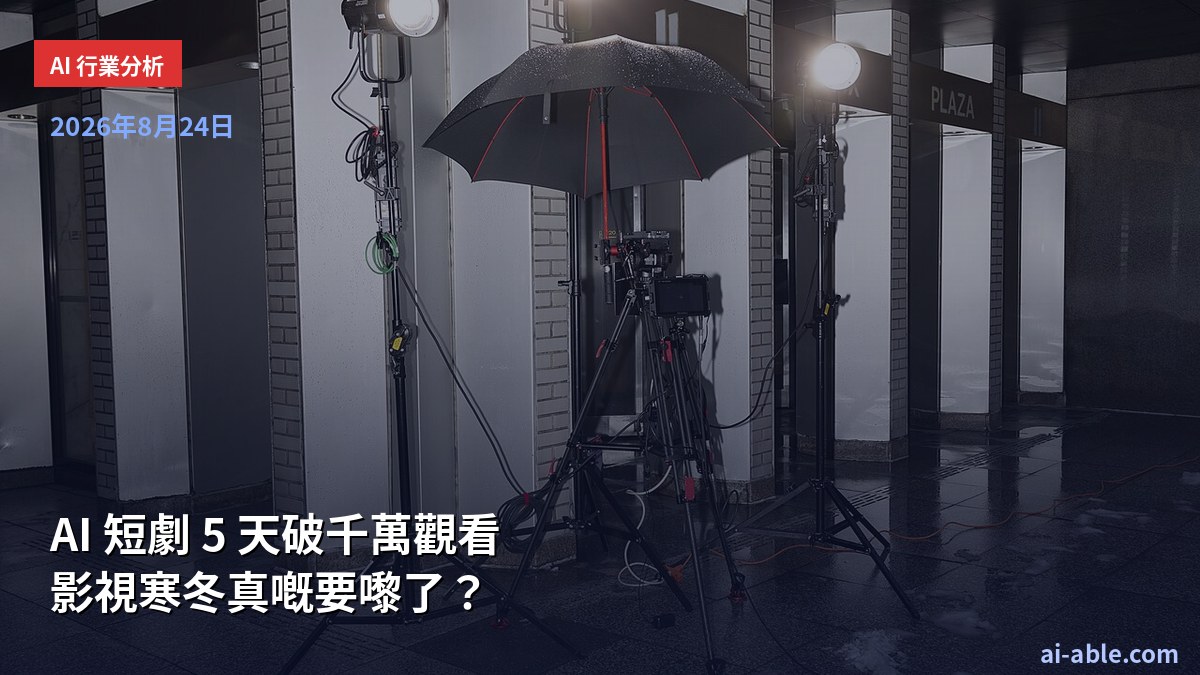
A Chinese micro-drama titled Writing Humans Into Demons (《把人寫成了妖》) has surpassed 10 million views within just five days of release, becoming the hottest video story of August 2026. What makes it remarkable: the series is almost entirely AI-generated — from visuals and sets to character performances, most of what viewers see is the product of artificial intelligence models rather than traditional live-action filming.
Why does this number matter? For comparison: a conventional web micro-drama typically needs weeks or months of promotion — plus a full cast, director, and production crew — to reach ten million views. Writing Humans Into Demons used an AI video workflow with production cycles measured in days and costs measured in hundreds of dollars. TVBS News reports that this AI drama wave is now shaking China’s film and TV industry, raising fears that a “film industry winter” has truly arrived.

Why Did It Go Viral? Decoding the AI Drama Playbook
The success of Writing Humans Into Demons is no accident. Drawing on Chinese industry data and media reports, several key factors drive the AI drama explosion:
1. Production Costs Down ~90%
Traditional micro-dramas cost tens of thousands of dollars per episode once actor fees, location rentals, and post-production are counted. AI dramas eliminate the shoot entirely — sets are generated, characters are performed by AI, and voices are synthesized. According to DataEye statistics, more than 221,900 new AI-generated dramas and AI comic dramas launched on Douyin in the first half of 2026 alone — a supply volume unthinkable under the traditional model.
2. Vertical-Native and Algorithm-Friendly
AI dramas are born vertical: episodes run 1–2 minutes, packed with plot twists, perfectly matched to short-video recommendation algorithms. Viewers don’t need to remember actor names — they chase emotional payoff. This “instant-gratification economics” is exactly the content type AI can mass-produce.
3. Genres That Live-Action Can’t Afford
Fantasy titles like Writing Humans Into Demons would demand heavy VFX budgets in traditional production. AI generation makes the visual spectacle of “humans transforming into demons” cheap. Xuanhuan, xianxia, and post-apocalyptic genres have become AI drama’s competitive strongholds.
Film Industry Winter? The Real Situation for Actors and Screenwriters
The AI drama boom raises the industry’s sharpest question: will human actors be replaced?
Chinese media reports show clear structural shifts. On one hand, working-class actors face shrinking opportunities — AI can generate virtual performers of any appearance and skill level, requiring no rest, no fees, no scheduling. In July, a fully AI-produced drama debuted on a provincial satellite TV channel for the first time, igniting nationwide debate. On the other hand, AI virtual actresses are already monetizing: one AI-generated virtual actress amassed 400,000 followers in two months, starred in hit micro-dramas, and signed real advertising deals.
Screenwriters face a more complex picture — and curiously, their value is rising. When the cost of generating visuals approaches zero, story, emotional design, and twist pacing become the scarce skills. Industry analysis notes the AI drama market shows brutal “80/20” polarization: hits make money, the long tail loses it — and what separates winners is precisely writing quality and traffic operations.

Going Global and Getting Regulated: The Two Big Variables
AI dramas aren’t just transforming China’s domestic market — they’re going global fast. According to The Straits Times, Chinese micro-drama companies like Newborn Town are pushing AI dramas overseas, with romance and suspense titles performing strongly in Southeast Asia and Western markets. AI has slashed translation and localization costs, and ad returns now match live-action dramas.
But regulatory tightening is an equally clear trend. In April, a drama suspected of using facial data without authorization sparked public outrage in China, prompting regulators to intervene. Copyright ownership, portrait rights, and deepfake risks hang over the industry like the sword of Damocles.
Conclusion: Not a Winter, But a Reshuffle
Behind the 10-million-views-in-5-days headline of Writing Humans Into Demons lies not the end of the film industry, but a rewrite of its rules. AI dramas are mainly taking market share from low-budget production; the real content competition — great stories, strong emotions, precise operations — is getting fiercer. For industry professionals, the answer isn’t to fear AI but to command it: screenwriters, directors, and producers who master AI tools will be this wave’s biggest winners. The film winter won’t come because of AI — but those who fail to adapt may feel the chill first.