Boston Dynamics has fitted its flagship humanoid robot Atlas with a brand-new pair of “factory-grade” hands, dubbed GR3 — only four fingers and 13 degrees of freedom, yet capable of loading a bit into a power drill, drilling into wood, tightening a small nut by fingertip, and even spinning two golf balls simultaneously in one hand. Meanwhile, parent company Hyundai Motor Group has committed to deploying 25,000 Atlas units across its global plants and is planning a new U.S. factory capable of producing 30,000 robots a year by 2028 — a direct challenge to Tesla’s Optimus. The humanoid race has officially moved from “viral demo videos” to “factory shift schedules.”
The GR3 Hand: Reverse-Engineering the Pinky Away
The most striking decision is one no rival dared to make: deleting the little finger. While Tesla’s Optimus, Figure and nearly every competitor stuck with five fingers, Boston Dynamics engineers ran an unusual internal experiment — taping their pinkies to their ring fingers for a full day and reporting what they could no longer do. The verdict: surprisingly little. A pinky adds three more degrees of freedom, more mass, more power draw and more things to break, without unlocking enough new grasps to justify itself.
The resulting GR3 hand packs 13 degrees of freedom — nearly double the previous version. The thumb alone carries four DoF and can oppose each of the three remaining fingers, while dense tactile sensors across the fingertips and palm read pressure changes in real time. All actuators use a single encapsulated type with no cables crossing the joints — a design aimed squarely at manufacturability and repairability rather than keynote-stage performance. The hand is deliberately sized like a large human hand, because Atlas is meant to work at workstations and with tools that were never redesigned around a robot: fit the robot into the world as built, not the other way around.
From Backflips to Shift Work: Live Training in Georgia
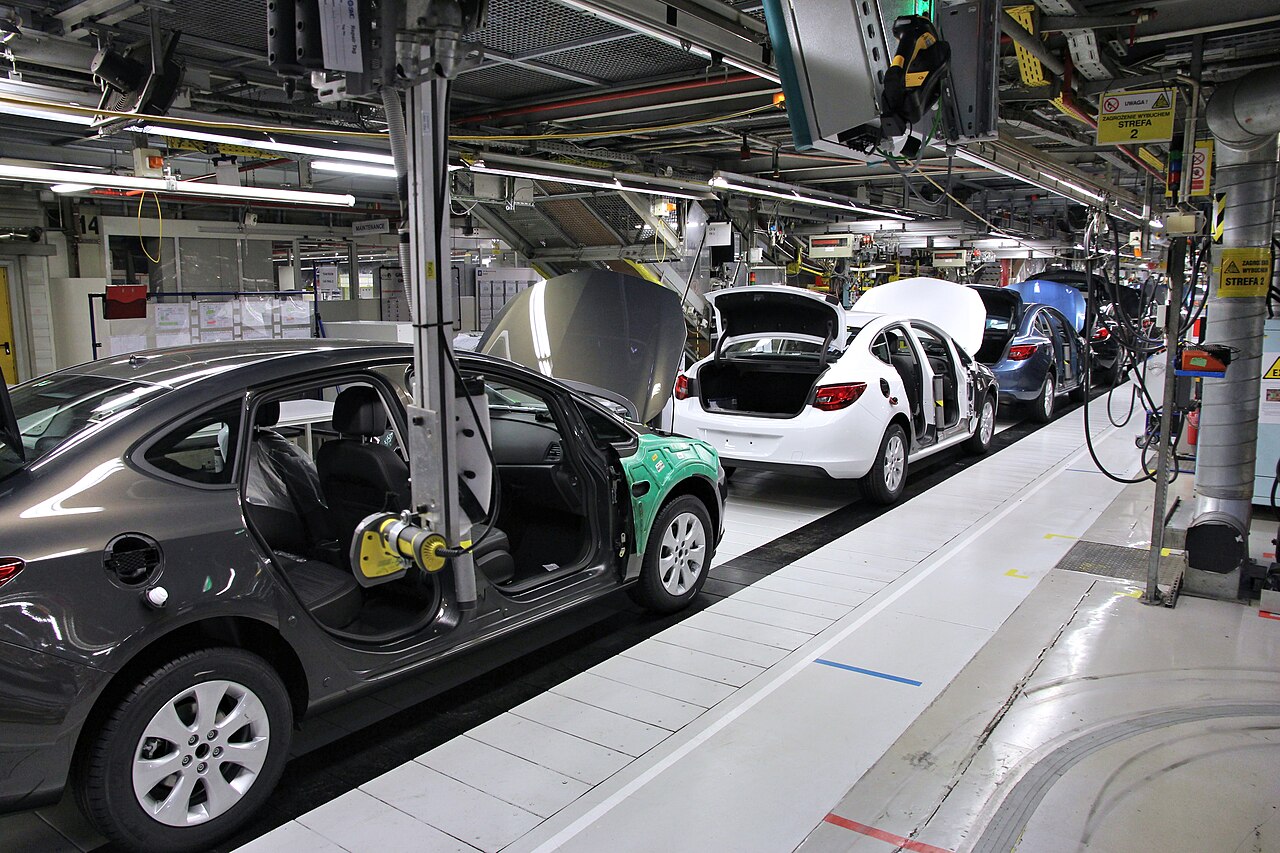
On September 21, Boston Dynamics opened the Robotics Metaplant Application Center (RMAC) inside Hyundai’s Metaplant mega-factory near Savannah, Georgia. This is not a simulation environment but a real automotive line: Atlas is currently learning to sort and arrange car parts so they arrive at assembly stations in the correct order. By 2030, Atlas is scheduled to begin component assembly, taking over the heavy, repetitive tasks that take a long-term physical toll on human workers.
The timeline is telling. Atlas has been able to walk, jump and backflip for years — the real bottleneck was never locomotion, but the ability to reliably pick an irregular part out of a bin and seat it correctly, which is precisely what the GR3 hand is built to solve. Next year, RMAC will move into a new building ten times larger, and Boston Dynamics plans to extend Atlas training to existing Spot and Stretch customers to scale real-world data collection.
25,000 Committed Units + a 30,000-a-Year Factory: Taking Aim at Tesla
According to Korea Herald and other reports, Hyundai and Kia have committed to taking 25,000 Atlas robots across their global plants over the next few years, with component assembly targeted for 2030. To keep up, the group is planning a new U.S. factory capable of producing 30,000 robots a year, targeting 2028 — a credible answer to Tesla’s Optimus program, which despite its publicity has yet to publish stable mass-production figures. “Together with Hyundai Motor Group, we are pioneering physical AI at enterprise scale,” said Zack Jackowski, Chief Product & Technology Officer at Boston Dynamics.
The supply chain is also shifting. Boston Dynamics officials have spent the month touring South Korean auto-parts suppliers, auditioning them for a new role as manufacturing backbone for humanoid robots. Meanwhile, Reuters previously reported that with Atlas still unprofitable, Boston Dynamics’ IPO is unlikely before 2028 — making mass-production success the direct arbiter of the celebrated company’s capital-market fate.
Challenges Remain: Labor Politics and the Cost Curve
Mass deployment faces real resistance. During the historic 35,000-worker strike at Hyundai’s Ulsan plants this July, union negotiators — for the first time in the auto industry — demanded a binding veto over humanoid robot deployment before a single Atlas enters the floor. The outcome could set the legal template for every manufacturer deploying physical AI. And with Atlas still in the red, per-unit cost, service infrastructure and real-world uptime remain the hard gates between a training center and a true mass rollout.
Conclusion: Physical AI’s Watershed Moment
The significance of this move goes far beyond a new hand: it marks the humanoid industry’s pivot from a “demo economy” to a “labor-hours economy,” where the metric shifts from video views to assembly tasks completed per shift. Hyundai’s 25,000-unit commitment and the 30,000-a-year megafactory represent the largest commercial bet on physical AI to date. For industry watchers, three indicators matter: RMAC’s actual training progress, the 2028 factory’s ramp-up, and the labor-negotiation precedent being set in Ulsan. Robots entering factories is no longer a trailer — it’s a schedule.