$220 Billion: The Largest Single-Company AI Investment in History
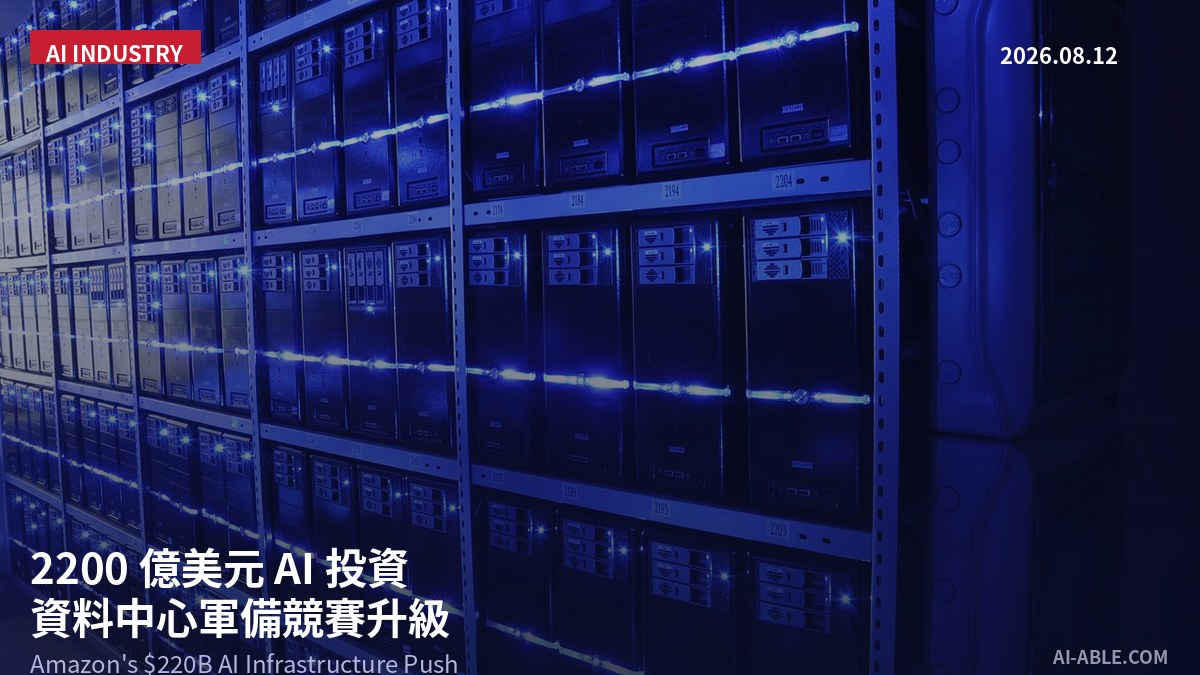
On August 11, 2026, Amazon announced that it is raising its annual AI-related capital expenditure to approximately $220 billion. This figure not only shatters the company’s own previous records but also sets the all-time high for infrastructure spending by any single corporation globally. According to Reuters, Amazon’s decision to continue expanding aggressively stems from a firm belief that demand for AI services is far outstripping available computing capacity.
The massive capital injection is primarily directed toward expanding data center capacity, procuring AI-specific chips (such as the Trainium series), and upgrading cloud computing infrastructure. Through Amazon Web Services (AWS), the company provides AI model training and inference services to enterprises worldwide. As generative AI applications expand from chatbots to enterprise automation, drug discovery, and scientific computing, the demand for computing power is growing exponentially.
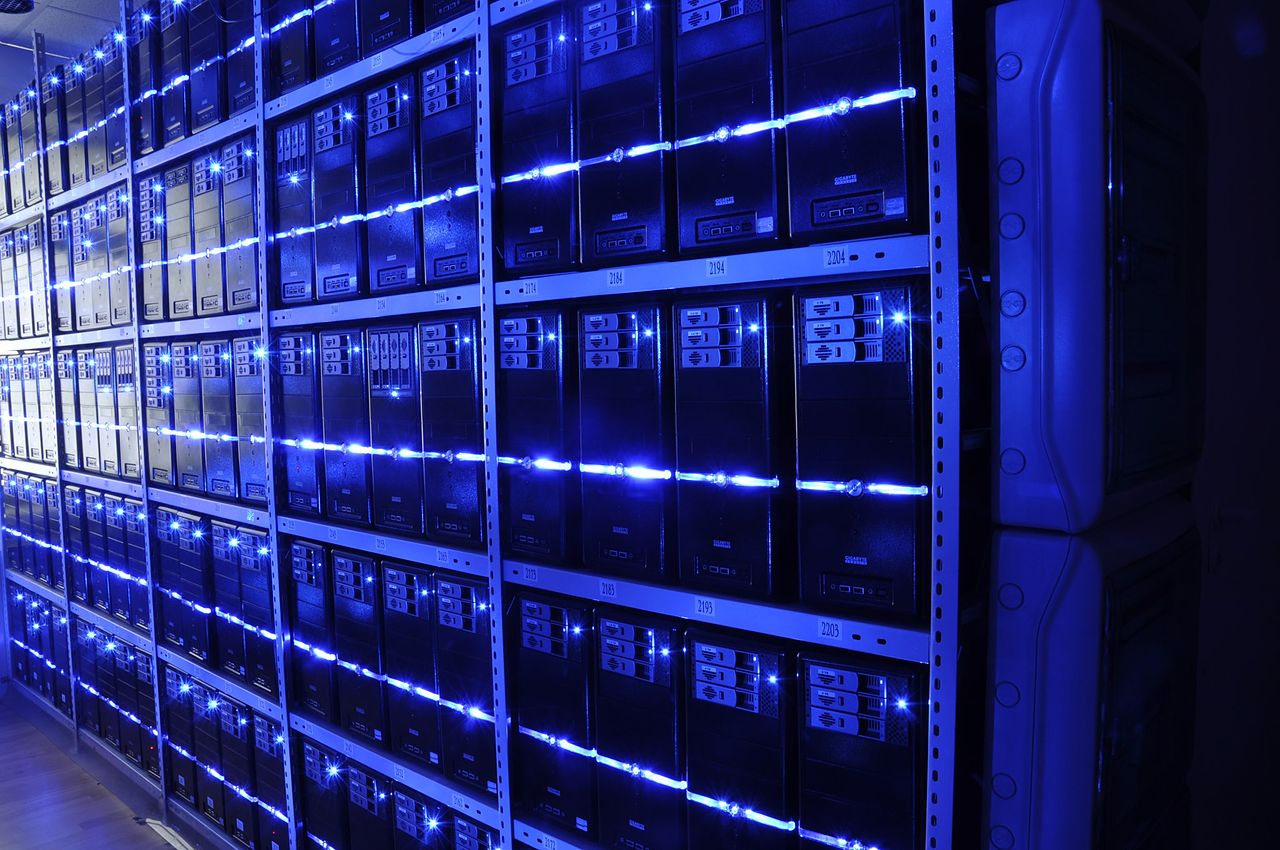
The Computing Power Arms Race Among Tech Giants
Amazon is far from alone in pouring astronomical sums into AI infrastructure. Microsoft, Google parent company Alphabet, Meta, and Oracle are all significantly increasing their AI-related capital expenditures. The core logic of this race is straightforward: whoever can deliver the most powerful, reliable, and affordable AI computing power will dominate the next wave of the technology revolution.
Meta CEO Mark Zuckerberg outlined his company’s global AI vision on the same day. He argued that the United States and Meta are positioned to win the global AI race, though they face fierce competition from China. Zuckerberg’s remarks covered open-source strategy, foundation model development, and the global deployment of AI applications, demonstrating Meta’s ambition to transform from a social media company into an AI infrastructure provider.

The Widening Gap Between Demand and Supply
The supply-demand imbalance in AI computing power has become an industry consensus. Amazon’s decision is based on a critical judgment: demand for AI services is growing at a rate that far exceeds the pace of infrastructure expansion. This means that even a $220 billion investment may still be insufficient to meet market demand in the coming years.
The direct consequence of this supply-demand gap is that AI computing costs remain stubbornly high, creating an increasingly steep barrier for small and medium-sized enterprises and startups. However, from another perspective, this dynamic also creates enormous commercial opportunities for companies specializing in AI chip design (such as NVIDIA) and data center construction services.
Singapore’s GDP Benefits: Global Economic Impact
The impact of AI capital expenditure extends well beyond the United States. Singapore’s Ministry of Trade and Industry announced on August 11 that, driven by AI capital spending lifting electronics exports, the country is raising its 2026 full-year GDP growth forecast from the previous 2.5%–3.5% to 4.5%–5.5%. Singapore’s Q2 GDP grew 5.9% year-on-year, significantly outperforming expectations.
Singapore’s case highlights an important trend: AI infrastructure investment is becoming a new engine for global economic growth. From chip manufacturing (TSMC, Samsung) to data center construction (Ireland, Singapore, Malaysia), the AI hardware supply chain is reshaping global trade patterns.
Startup Opportunities: River AI Raises $1.1 Billion
Against the backdrop of the giants’ arms race, startups are also actively seeking breakthroughs. River AI, founded by xAI co-founder Igor Babuschkin, announced on August 11 that it has raised $1.1 billion to expand tools that help clients build personalized AI models. This funding round demonstrates that even in an environment where foundation models are increasingly dominated by giants, investors remain bullish on the market potential of AI toolchains and customized solutions.
River AI’s business model forms an interesting contrast with Amazon’s massive investment: on one end are hyperscale cloud platforms pouring hundreds of billions into general-purpose computing infrastructure; on the other are precision service providers using that computing power to build bespoke models for specific clients. The two are not competitors but rather different layers of the AI industry stack.
Conclusion: Investment Risk and Long-Term Value
The $220 billion investment scale inevitably raises a critical question: is this sustainable? If the expansion of AI application scenarios fails to keep pace with infrastructure buildout, tech giants could face overcapacity and declining return on investment. However, current evidence suggests that demand is still accelerating — from enterprise AI agents to scientific research, from medical diagnostics to autonomous driving, the application scenarios for AI computing power are expanding at an unprecedented rate.
For investors and industry observers, Amazon’s investment sends a clear signal: AI infrastructure construction is still in its early acceleration phase, not approaching its peak. In the near term, investors who focus on the computing power supply chain (chips, cooling systems, power supply) and AI application monetization capabilities are most likely to benefit from this wave.