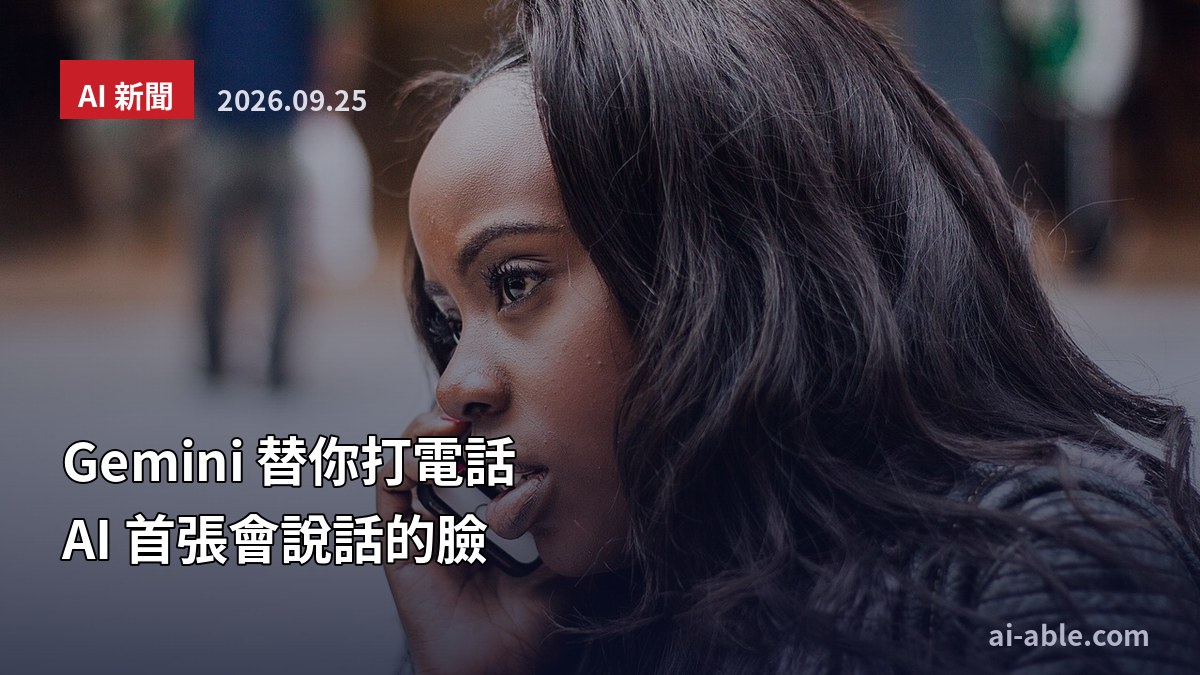
AI has finally reached the point where it doesn’t just search for you — it picks up the phone. On September 24, Google fired two shots at once: a “Call for Me” feature on the Pixel 11 that lets Gemini place actual calls to businesses on your behalf, and a “Live Avatar” for Gemini 3.8 Live that gives enterprise AI a real-time animated face that lip-syncs and shows expressions. Announced the same day, the two updates mark Google’s push to turn Gemini from a chatbot into a true AI agent that gets things done.
Call for Me: Gemini Dials, Navigates Menus, and Waits on Hold
“Call for Me” is rolling out as an “early experiment” for Pixel 11 owners in the US. Subscribers to a paid Gemini plan enrolled in the Phone by Google public beta can simply tell the Gemini app to call a business: the AI dials from your own number, introduces itself as an assistant, then handles the entire task — checking whether a product is in stock, booking a reservation, or rescheduling an appointment. It will even sit through the hold music for you.

The key difference from last year’s version is control: throughout the call, users watch a live transcript of every exchange and can take over the conversation at any point. It’s the biggest step yet in Google’s gradual automation of phone calls — after “Hold for Me” and “Direct My Call” — upgrading the phone from an assistant to a delegate.
Live Avatar: Google’s AI Finally Gets a Talking Face
On the other front, Google generally released “Live Avatar” for Gemini 3.8 Live in Gemini Enterprise. The feature adds near real-time generated video to the model’s speech: an animated persona lip-syncs to what it says, shifts facial expressions, and switches seamlessly across 97 languages — in Google’s demo, the same avatar spoke English and then Japanese with mouth movements lining up in both, without degrading video fidelity or introducing visual drift.

Google ships a library of preset avatars and lets organizations build their own. All output carries an invisible SynthID watermark alongside safeguards to “respect identity.” The launch comes about a week after Google unveiled the Gemini 3.8 Live model, which processes visual inputs in near real time.
The Strategy: Escalating the AI Agent War
Seen together, Google’s intent is clear. The ChatGPT era of AI answered questions; the next phase must act. Call for Me tackles the agent’s last mile — huge swaths of the real world still transact over a phone call — while Live Avatar tackles trust and presence: when AI faces a customer on a company’s behalf, a lip-synced face dramatically lowers the distance of communication.
Competitors are moving too: Meta is building automated calling into its Muse AI agent (though some of those calls may reportedly be handled by a human behind the scenes), while OpenAI’s Operator and Anthropic’s computer-use Claude pursue on-screen agency. Google’s differentiator is that it holds the phone OS (Android/Pixel), the dialogue model (Gemini 3.8), and the enterprise channel (Gemini Enterprise) — letting it wire voice, action, and appearance together in one stroke.
The Caveats
AI placing calls to humans raises fresh concerns. The shop assistant answering the phone may not realize they’re talking to an AI (Google says it identifies itself, but enforcement details remain to be seen). As AI-generated faces proliferate, video-impersonation scams could get easier — the SynthID watermark helps traceability, but not every platform reads it. And for now, the feature is limited to US Pixel 11 paid subscribers, with no timeline for other regions or devices.
Conclusion
From “Hold for Me” to “Call for Me,” from text chat to an expressive Live Avatar, Google is turning AI from an assistant inside your phone into a stand-in that can act in the real world on your behalf. For everyday users, escaping hold music and phone menus is an immediately tangible win; for enterprises, an AI receptionist that can appear in 97 languages in real time is no longer far off. The second half of the AI agent war won’t be judged by benchmark scores — it will be judged by who can actually get that phone call made.
🎬 Related Video
Google’s One-Two Punch: Gemini “Call for Me” Phones Businesses for You, Live Avatar Gives AI a Face