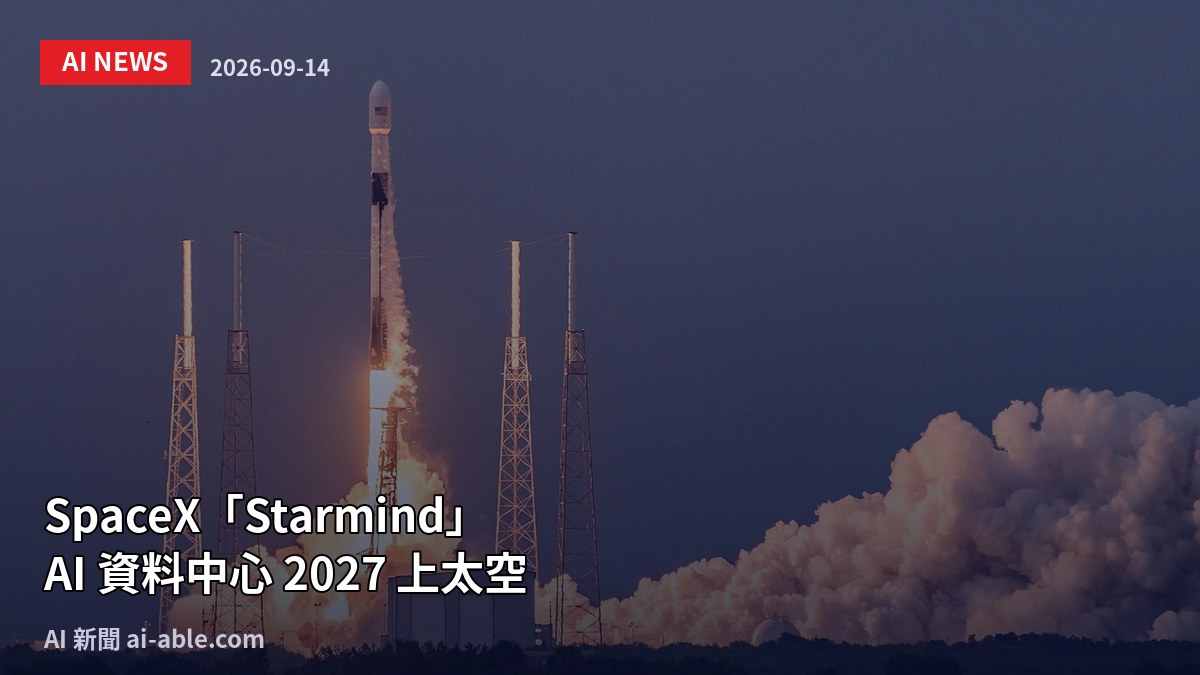
‘Highly Confident’: AI Data Centers Go to Space Next Year
While the ground-based AI data center arms race burns white hot, Elon Musk is pushing the battlefield into orbit. In a post on X, Musk said he is “highly confident” that SpaceX will launch Nvidia Vera Rubin NVL72 AI supercomputers into space next year, officially kicking off an orbital AI data center program called Starmind. On SpaceX’s first earnings call, Musk had already committed to building the company’s future AI infrastructure exclusively on Nvidia hardware, calling the Vera Rubin architecture the best AI computer design available.
This is not the first time Musk has talked about space-based compute, but the timeline is now concrete: the first Starmind satellite is slated for launch in the fourth quarter of 2027 — roughly a year ahead of the schedule SpaceX had previously shown investors before going public. Days earlier, at a Goldman Sachs technology conference, SpaceX’s CFO revealed the company had just signed an AI compute hosting deal worth about $1.11 billion per month, boosting confidence in its $100 billion annual recurring revenue target. Orbital compute is no longer a concept; it is a signed order book.
AI1: A 20-Meter-Tall Orbital Server Room with a 70-Meter Wingspan
According to disclosed design details, the first Starmind satellite, internally codenamed AI1, is a genuine “space server room”: 20 meters tall with a 70-meter wingspan, supporting peak power of around 150 kW, average compute output of roughly 120 kW, and latency in the range of 3 milliseconds. It carries a space-optimized version of Nvidia’s Vera Rubin NVL72 — the entire rack-scale system is launched into orbit as-is, rather than being dismantled and rebuilt.
SpaceX’s roadmap calls for “significant scale” by 2028, and Musk’s end-state vision is far grander: up to one million orbital data centers. His logic is that space-based compute avoids the land acquisition battles and community opposition that increasingly hamper Earth-bound data center construction, while offering uninterrupted solar power and theoretical advantages in radiative cooling. Wall Street is already taking the story seriously: JPMorgan analyst Doug Anmuth models SpaceX building toward approximately 75 GW of orbital computing capacity between 2029 and the end of 2031 — a meaningful share of the global AI compute buildout if it materializes.
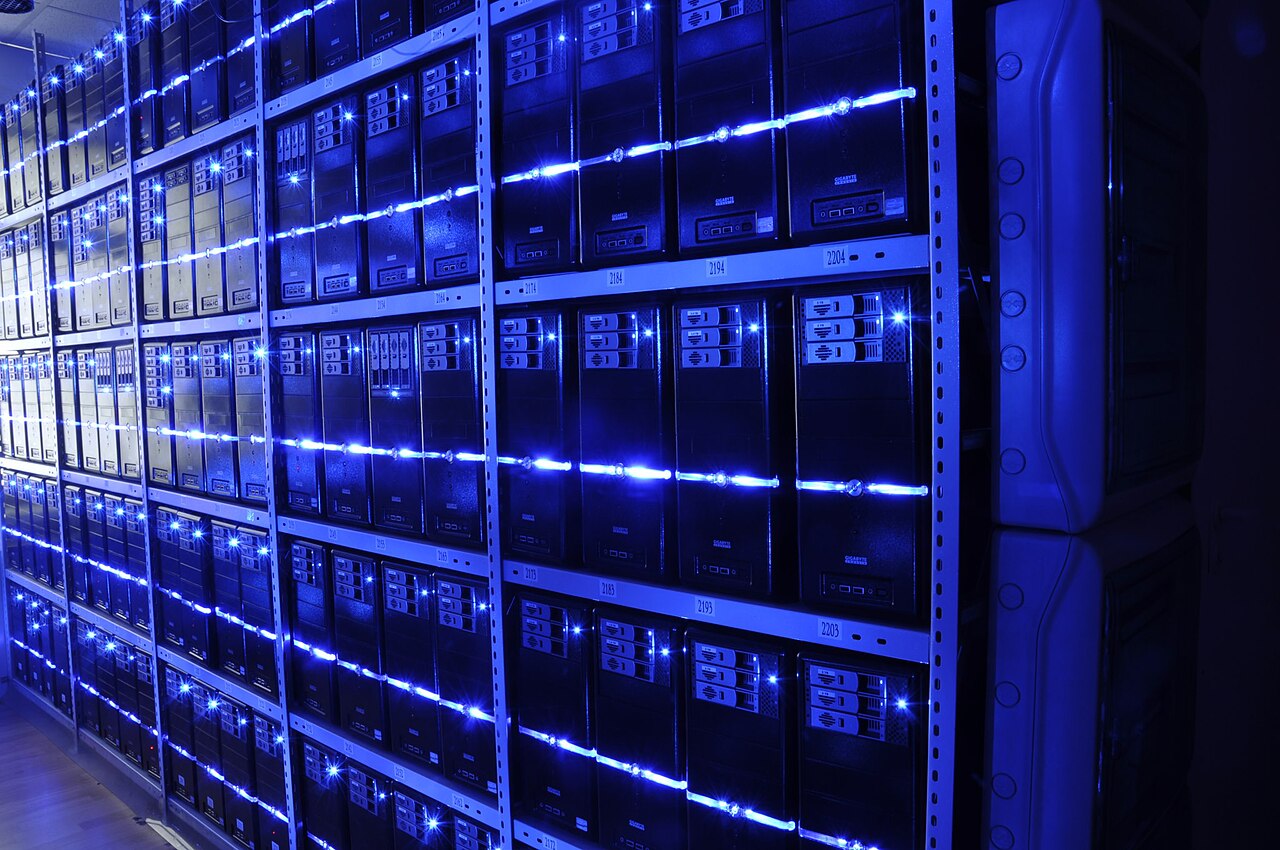
Four Big Obstacles: Cooling, Radiation, Data Transfer and Obsolescence
The industry, however, is visibly skeptical of the timeline. CNBC, citing multiple experts, laid out at least four hurdles orbital data centers must clear:
- Cooling: Terrestrial data centers rely on liquid cooling, but in the vacuum of space, heat can only be shed through radiative cooling — a completely different mechanism — and hardware must tolerate cosmic radiation. Evelyn Chow, portfolio manager at Neuberger, called cooling “a huge issue.”
- Rapid obsolescence: GPUs evolve so fast that a state-of-the-art data center launched at enormous cost “might be obsolete in a couple of years,” warns Blaine Curcio, founder of Orbital Gateway Consulting.
- High-volume data transfer: Rohit Jha, CEO of laser communications firm Transcelestial, put it bluntly: “Anyone can build data centers, but if you can’t talk to these AI systems, then those data centers are useless.” Beaming training and inference results back to Earth is the last-mile problem.
- Hyperscale power: Reaching true hyperscale in orbit would likely require space-based nuclear power, which the industry estimates is another five to seven years away.
Chow’s verdict: orbital data centers are a “next-decade event” that requires four to five years of sustained mass satellite launches and a concomitant connectivity buildout before true scale can even be contemplated. Even Microsoft President Brad Smith has questioned whether companies will actually shift compute from land to low Earth orbit.

Is Musk Right? Remember Starlink’s Track Record
The skeptics are many, but Curcio offers a counterpoint: SpaceX has proven experts wrong before. “Had you asked any satellite industry expert in the late 2010s whether SpaceX could launch 10,000 satellites by 2025, every single one of them, myself included, would have said ‘no chance.'” Starlink grew out of exactly that kind of ridicule.
Markets are reacting on both sides of the trade: when SpaceX confirmed its Nvidia exclusivity in August, Nvidia shares rose more than 4%, while SpaceX stock initially fell over 10% on concerns about capital intensity and execution risk before paring losses. Where this story lands depends less on Musk’s confidence and more on whether Starship’s launch cadence and reliability can plausibly support the scale he describes.
Conclusion: The Starting Gun Has Fired
Whether or not AI1 lifts off on schedule in 2027, Musk’s declaration has redrawn the map of the AI infrastructure race — from land and power grids all the way to low Earth orbit. For industry watchers, three signals are worth tracking: Starship’s launch frequency, AI1’s actual launch window, and whether SpaceX’s billion-dollar-a-month AI hosting contracts keep renewing. Space-based compute may still be a next-decade story, but the starting gun of the orbital computing race has officially fired.
🎬 Related Video
Musk’s Starmind: SpaceX to Launch Nvidia-Powered Orbital AI Data Centers