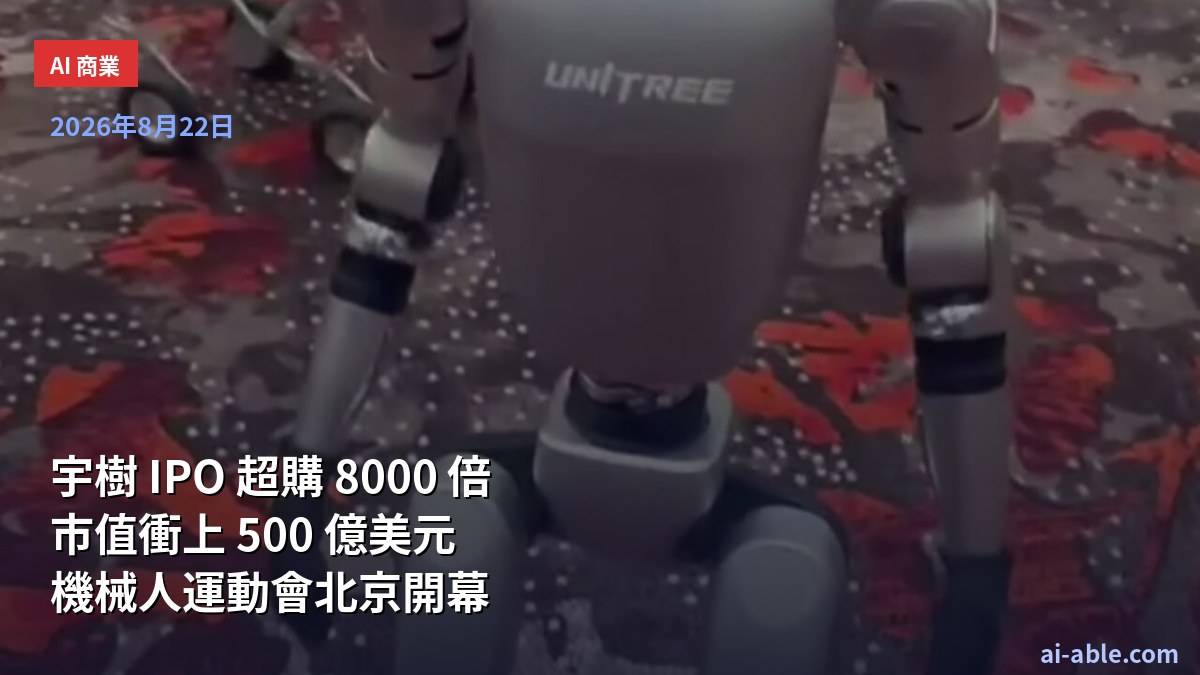
The humanoid robotics industry just had a historic week. Hangzhou-based Unitree Robotics debuted on Shanghai’s STAR Market with an IPO oversubscribed more than 8,000 times — one of the hottest listings in the board’s history. Within days, shares climbed roughly 460% above the offer price, closing at a market value near $50 billion after touching approximately $66 billion at the peak. Meanwhile, the second World Humanoid Robot Games opens today (August 22) in Beijing, with 2,056 machines from 666 teams competing. Capital markets and physical technology converged in the same week, announcing that the commercial era of humanoid robots has formally begun.
8,000x Oversubscription: The Hottest Robot Ticket in Town
Unitree’s IPO far exceeded market expectations. The company priced at 150.8 yuan per share, raising about 6.1 billion yuan (roughly $905 million), with retail demand exceeding available shares by more than 8,000x — making Unitree one of the most sought-after STAR Market debuts ever. As the first humanoid robotics company to list onshore in mainland China, its listing is widely viewed as the pricing anchor for the entire sector.
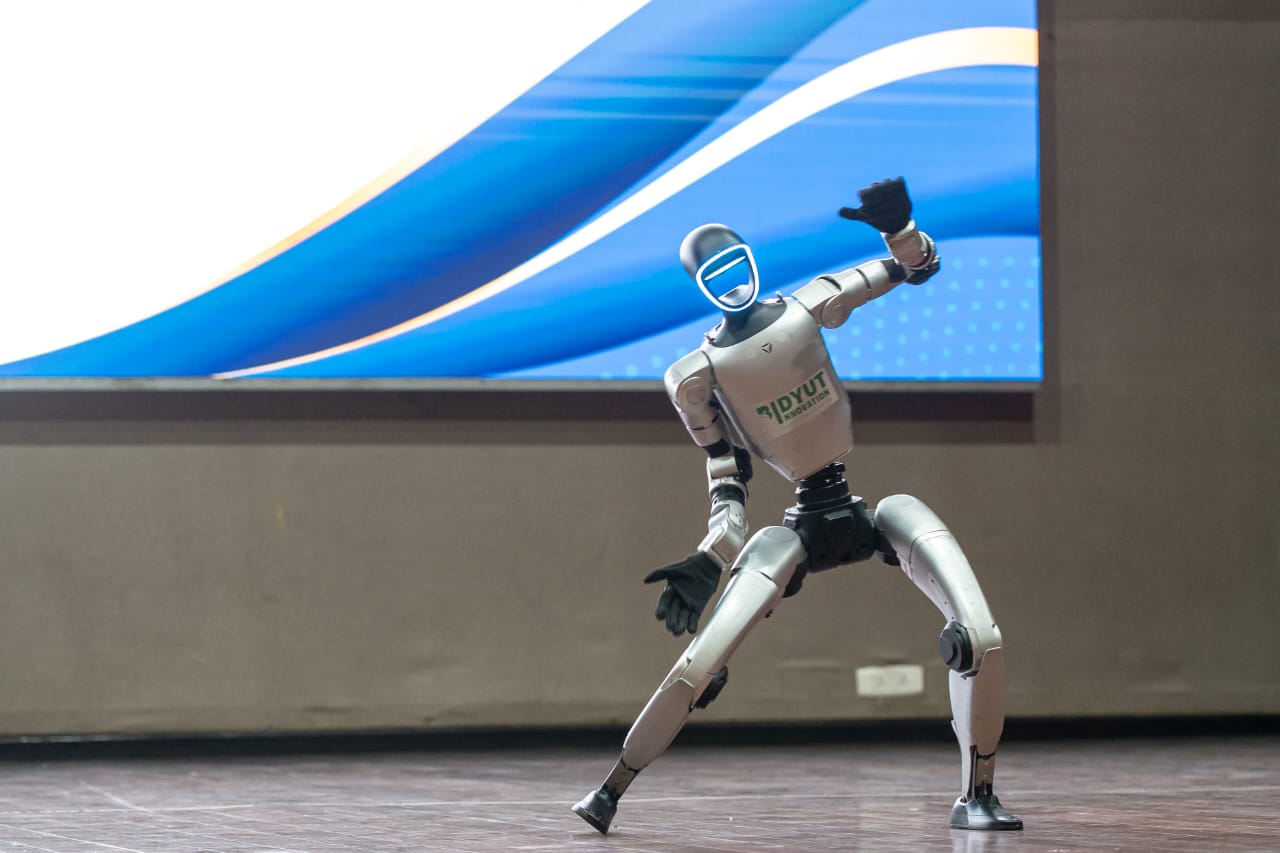
On debut day the stock surged more than 600% at the peak, briefly lifting the market cap to around $66 billion. Although shares pulled back over the following sessions, they still closed roughly 460% above the offer price, holding the $50 billion threshold. By comparison, US rival Agility Robotics — taken public via SPAC — now looks strikingly “cheap.” That contrast is precisely the value of the first real public-market pricing benchmark for humanoid robotics.
A Profitable Robot Company: Scarcity Fuels the Frenzy
Unlike most cash-burning robotics startups, Unitree is a rare profitable enterprise. Its quadruped product lines (Go2, B2 and others) ship in real volumes across global consumer and industrial markets, while its humanoid G1 and H1 models are already in mass production and delivery. Scarcity plus profitability plus policy tailwinds (China’s aggressive humanoid robotics push) formed the triple rationale behind the frenzy.
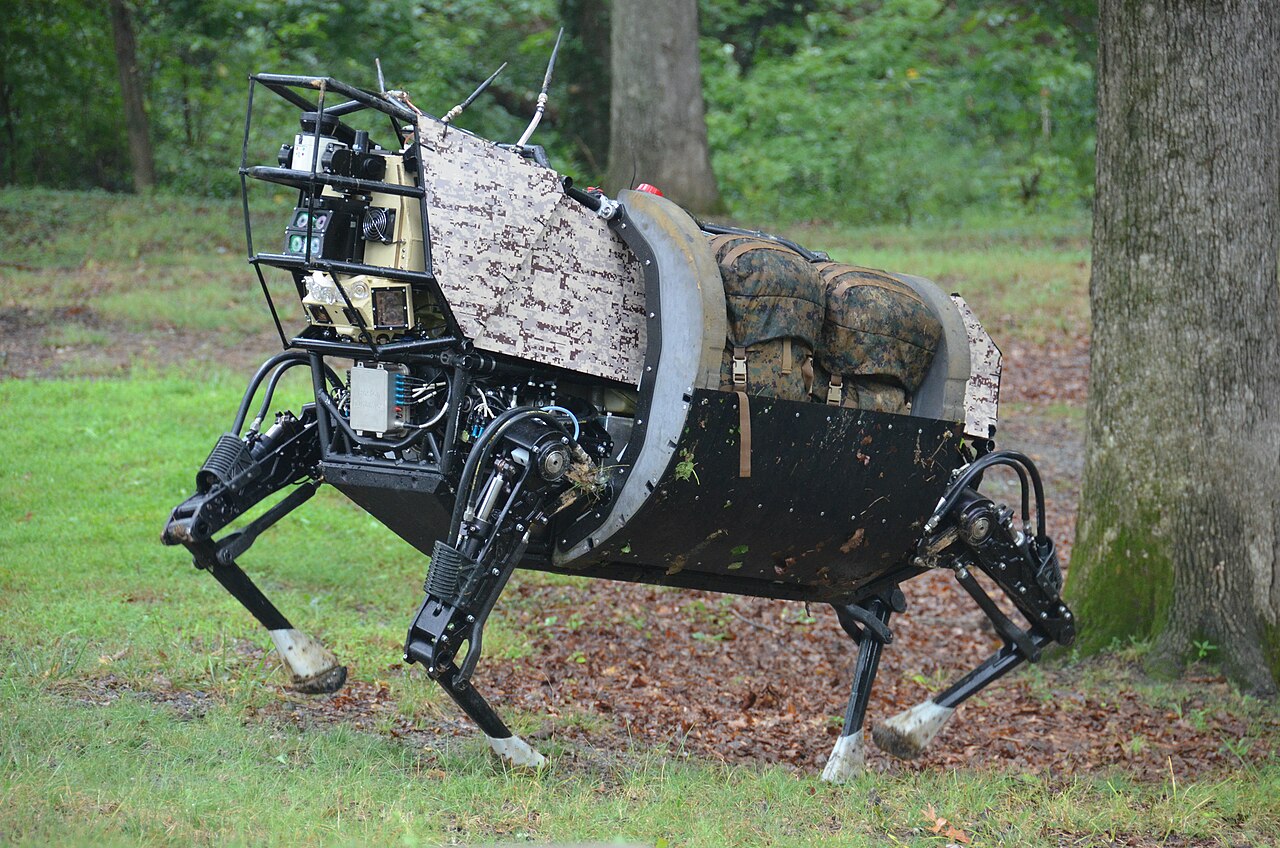
Notably, Unitree’s shipment mix is transforming fast. According to industry data cited by Forbes and others, global humanoid robot shipments are approaching 30,000 units so far in 2026 — up roughly 300% year over year — with a significant share flowing into factories and warehouses rather than merely serving as viral video demos.
The Robot Olympics: A Real-World Exam for 2,056 Machines
Beyond the market frenzy, Beijing is hosting a more grounded test. The second World Humanoid Robot Games opens today at the National Speed Skating Oval, with participation exploding from a few hundred machines in the first edition to 2,056 robots from 666 teams — and several fully autonomous events added, where robots must run, navigate obstacles, and manipulate objects without remote control.
Warm-up clips have already gone viral: one humanoid lost control during a sprint test, slammed into a safety wall, broke at the waist and sent sparks flying; another “threw a tantrum” at a conference demo after a remote-control failure. These awkward moments reveal the industry’s truth — running is easy, stopping is hard. Dynamic balance and real-time decision-making remain the core challenges for humanoids.

Bubble Warnings: Cold Words from the ECB and Hedge Funds
Not every voice is bullish. An ECB expert group warned this week that immense AI expectations are driving stock prices to new heights, that a correction is “likely,” and that a sharp fall in tech stocks could trigger financial-crisis-level spillovers in Europe. Michael Burry posted again, noting that data center construction keeps accelerating despite higher interest rates and that US GDP growth is “really counting on” the AI buildout. Some Chinese hedge funds have already rotated out of Nvidia and US hyperscalers, calling it a “super bubble.”
Unitree itself faces valuation questions: a $50 billion market cap for a company whose annual revenue is still measured in billions of yuan implies a price-to-sales ratio far beyond typical hardware ranges. Bulls argue this is the “Tesla moment” for humanoids — seize the platform ecosystem first, and profit curves will follow. Bears call it sentiment pricing and say a pullback is only a matter of time.
Conclusion: The Anchor Is Set, the Deployment Battle Begins
Bubble or not, Unitree’s IPO has planted the first public-market pricing coordinate for humanoid robotics, and capital, talent, and supply-chain resources will accelerate toward the leaders. Meanwhile, every fall and rise of the 2,056 robots in Beijing tells the market the same thing: valuations can explode overnight, but technology deployment must be earned step by step. For investors, short-term volatility is inevitable — yet the industry’s main storyline, of robots turning from “pets” into “coworkers,” has no way back.