Core Finding: Go2 vs Mini Cheetah, Matched to the Millimetre
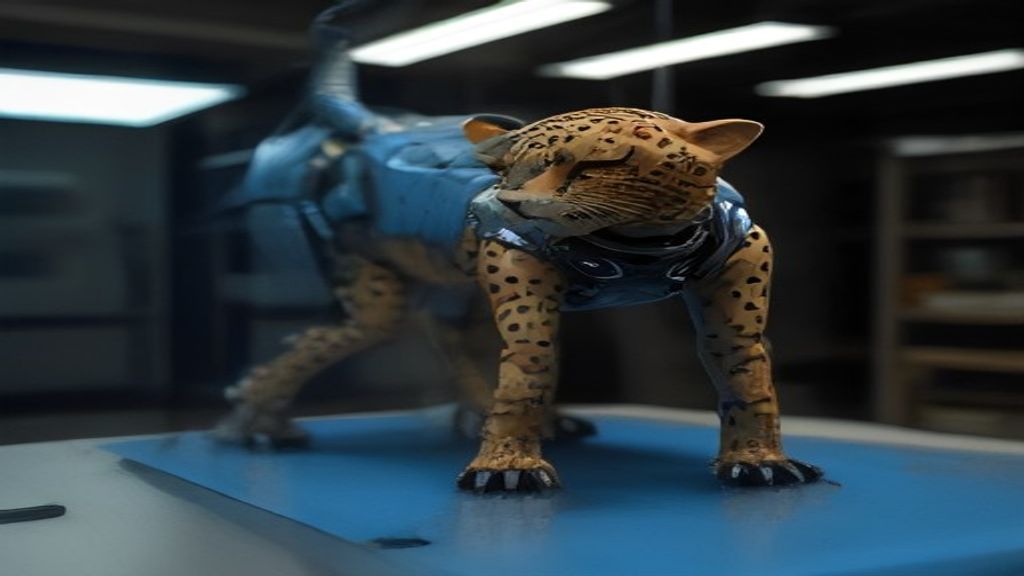
A Reuters deep-dive published August 18 reveals that Unitree Robotics — the world’s biggest producer of humanoid and quadruped robots — based its most successful robot dogs on innovations funded by the US military. The most striking evidence: Unitree’s $1,600 Go2 robot dog reportedly matches, almost to the millimetre, MIT’s Mini Cheetah, developed under the Army’s DEVCOM Army Research Laboratory program.
Mini Cheetah’s development was funded by US taxpayers to keep the American military technologically ahead. But open-source papers, patents and teaching videos let the technology circulate globally — where a Chinese company commercialized it at scale, and is now capturing worldwide markets, including American university labs and businesses, at rock-bottom prices.

“US Funded the Breakthrough, China Built at Scale”
The report sketches a brutal cycle: the US military and National Science Foundation spent years funding basic research at MIT, Boston Dynamics and other institutions; the results were published openly in academic literature; Chinese engineers iterated rapidly on those public findings, combining them with Pearl River Delta electronics supply chains and actuator costs collapsing by roughly an order of magnitude thanks to China’s EV industry — producing a $1,600 consumer robot dog.
- Unitree M107 joint motors: dual-encoder design leveraging Chinese EV supply chains to drive costs to a fraction of Western equivalents
- G1 humanoid: bill of materials ~$8,976, retailing at $13,500; the R1 model starts at just $4,900
- 2025 shipments: over 5,500 humanoid robots shipped (32.4% of global units by the company’s count)
Pentagon Pushback: 1260H List + GUARD Act
US countermeasures escalated sharply this year. On June 8, the Department of Defense added Unitree (Hangzhou Yushu Technology Co., Ltd.) to its Section 1260H list of Chinese Military Companies. Three days earlier, bipartisan lawmakers introduced the GUARD Act (H.R. 9129), requiring national security agencies to review Chinese-made humanoid and quadruped robots; platforms deemed unacceptable would join the FCC’s Covered List — effectively banning their sale in the US, with unreviewed platforms auto-listed after one year.
“Robots made by China are a threat to national security, critical infrastructure, and American workers,” said Rep. Moolenaar, the bill’s lead sponsor. “They contain backdoors that can be hijacked for espionage.”
Same Week: Unitree Soars 620% in Market Debut
Ironically, in the very same days the Reuters investigation dropped (August 18-19), Unitree listed on Shanghai’s STAR Market as the world’s first humanoid-robot IPO. Shares surged as much as 620-629% on debut, with the market cap at one point crossing roughly $58 billion — proof that capital markets are entirely untroubled by Washington’s security concerns and are betting big on China’s robotics industry.
That valuation overnight made Unitree one of the world’s most valuable robotics startups, holding the most complete quadruped-plus-humanoid product line on the planet.

Why It Matters: The Double-Edged Sword of Open Research
This story touches a deep contradiction: the Western tradition of open science (published papers, open-source code) is the engine of innovation — but in an era of great-power competition, that same tradition can turn military-funded research into a rival’s commercial product overnight. The Mini Cheetah case may be just the tip of an iceberg of similar disputes already playing out across AI models and chip design.
For investors and policymakers, three threads to watch: (1) whether US restrictions escalate from lists to outright sales bans; (2) whether Unitree’s European expansion gets snagged by the EU AI Act; and (3) whether Chinese robotics supply-chain cost advantages can keep squeezing Western competitors.
Conclusion
“The US funded the breakthrough; China built it at scale” — Reuters’ summary captures the robotics industry’s most awkward reality. When MIT’s open-source cheetah becomes a Hangzhou mass-production line and then a 620%-surging IPO, the question of technology borders is no longer academic debate but a live geopolitical battleground.
(Sources: Reuters investigation 2026-08-18, WION, TechTimes, MSN/Reuters syndication, August 18-19, 2026)